Category: Personal Reflection

  • The Birthday Pizza

    The Birthday Pizza

    Every year, around my birthday, I usually put on a celebration that looks acceptable from the outside.

    I go somewhere.

    I sit at a table.

    I order something average.

    Sometimes there are friends. Sometimes there are not. Sometimes the room is loud enough to convince me that I am participating in life the way people are supposed to. Sometimes I mistake being around people for being less alone. Sometimes I force myself to be social because there is a voice in the world that says a birthday should be witnessed, photographed, toasted, announced, and surrounded.

    And maybe there is nothing wrong with that.

    There are years when we need the room.

    There are years when we need the noise.

    There are years when we need someone across from us saying, I am glad you are here.

    But this year, I wanted something different.

    This year, I stayed home.

    Not out of sadness.

    Not out of defeat.

    Not because no one asked.

    Not because I had nowhere to go.

    I stayed home because I wanted to spend the day in a way that felt honest.

    There is a difference.

    I have been learning that a life does not become smaller simply because it becomes quieter. Sometimes quiet is not emptiness. Sometimes, quiet is where the truth finally has room to sit down. Sometimes, the most important celebration is not the one that gets witnessed by others, but the one that proves you have finally learned how to keep company with yourself.

    So I made myself something I wanted.

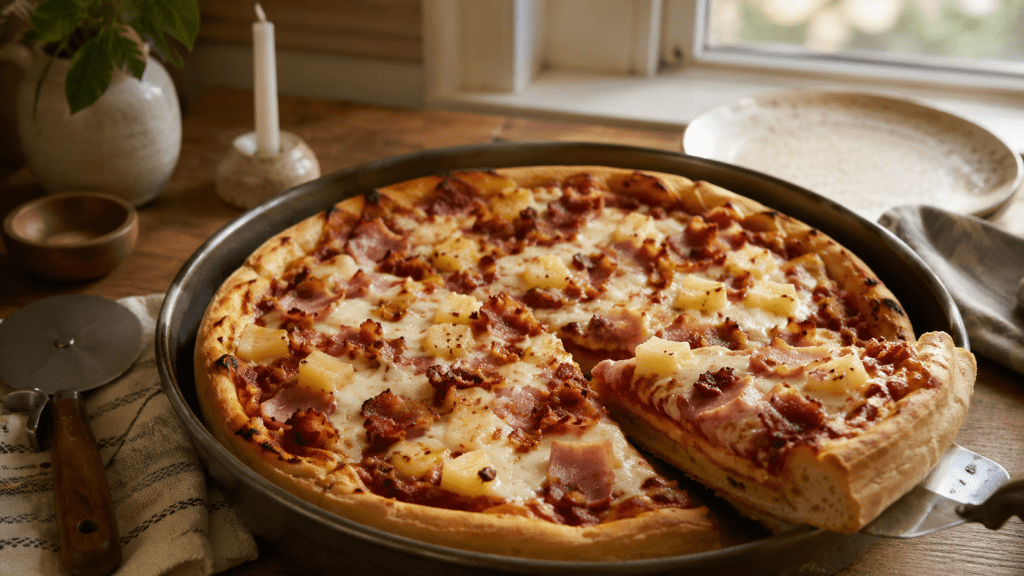
    Hawaiian pizza.

    Yes.

    Pineapple on pizza.

    Fruit on pizza.

    The thing people argue about, like it is a moral failure instead of a topping choice. The thing that makes certain people act as if civilization itself is held together by pepperoni, sausage, and obedience. The thing that seems to exist, at least in part, to provoke.

    And maybe that is why I wanted it.

    Not because Hawaiian pizza is rebellious in some grand political sense. It is still pizza. Dough, sauce, cheese, ham, pineapple, bacon. It is not a manifesto. It is dinner.

    But sometimes dinner tells the truth anyway.

    For years, I think I was careful in ways I did not always notice. Careful about what I said. Careful about what I wanted. Careful about how much of myself I allowed into the room. Careful about not being too strange, too quiet, too intense, too honest, too much. There is a slow violence in that kind of self-editing. You learn to trim yourself before anyone asks. You learn to stand at the edge of your own life and call it maturity.

    But this year has been different.

    I have been trying to become more honest.

    In my writing.

    In my living.

    In the small, ordinary choices that do not look important until you realize they are the entire architecture of a life.

    A birthday meal does not have to impress anyone.

    It only has to tell the truth.

    And the truth was this: I did not want another average restaurant meal. I did not want to sit somewhere under manufactured lighting, paying too much money for a plate that arrived without memory. I did not want to perform gratitude for an evening that did not feel like mine.

    I wanted dough under my hands.

    I wanted sauce.

    I wanted cheese.

    I wanted pineapple browned in a pan until some of its sweetness deepened and its edges caught a little color. I wanted bacon crisp enough to matter. I wanted ham. I wanted the absurd, beautiful combination of sweet, salty, smoky, and soft. I wanted a pizza that did not ask permission to exist.

    That may sound like too much meaning to place on a pizza.

    But food has always carried more than hunger.

    Food remembers what we refuse to say plainly. It carries loneliness and celebration, thrift and pleasure, memory and invention. It tells the story of who cooked, who was fed, who was forgotten, who made do, who dared to make something strange and call it good.

    A homemade pizza is not just a meal.

    It is evidence.

    Evidence that you can choose yourself without making a speech about it. Evidence that care does not always arrive from someone else’s hands. Evidence that a quiet room can still hold warmth. Evidence that another year passing need not be marked by spectacle.

    Sometimes it can be marked by flour.

    By yeast.

    By a hot pan.

    By pineapple.

    By the ridiculous courage of making exactly what you wanted and refusing to explain it too much.

    I liked it.

    That feels important to say.

    Not because the world needed another defense of Hawaiian pizza, but because there is freedom in liking what you like without apology. There is freedom in making the meal you want, rather than the one that would make sense to someone else. There is freedom in realizing that taste, like identity, does not always need a courtroom.

    This year, I stayed home.

    This year, I made myself pizza.

    This year, I let quiet be enough.

    And yes, I put pineapple on it.

    Here is the recipe to prove it.

    14-Inch Deep Dish Hawaiian Pizza

    This pizza is built for a 14-inch/35 cm deep-dish pan. The crust is seasoned gently so it complements the toppings without overpowering them. The pineapple is caramelized first to deepen its sweetness and remove excess moisture, helping keep the pizza from becoming soggy.

    Ingredients

    For the Dough

    • 500 g all-purpose flour
    • 5 g instant yeast
    • 9 g fine salt
    • 4 g sugar
    • 1.5 g garlic powder
    • 1.5 g onion powder
    • 1 g dried oregano
    • 0.5 g black pepper
    • 325–340 g warm water, aboutΒ 38–40Β°C / 100–105Β°F
    • 40 ml olive oil

    Start with 325 g of water. Add the remaining water only if the dough feels too dry.

    For the Pan

    • 30 ml olive oil

    For the Caramelized Pineapple

    • 120–160 g pineapple, drained and patted dry
    • 1 teaspoon butter or oil
    • Small pinch of salt
    • Optional: tiny pinch of brown sugar
    • Optional: tiny pinch of red pepper flakes

    For the Toppings

    • 225–275 g mozzarella cheese
    • 150–200 g ham or Canadian bacon
    • 75–100 g cooked bacon, chopped
    • 200–250 g pizza sauce
    • 25–40 g thin red onion, optional
    • Optional: extra mozzarella for the top
    • Optional: red pepper flakes or hot honey after baking

    Optional Crust-Edge Finish

    • 15 g melted butterΒ orΒ 15 ml olive oil
    • Small pinch of garlic powder
    • Small pinch of oregano
    • Small pinch of salt

    Method

    1. Make the Dough

    In a large bowl, combine the all-purpose flour, instant yeast, salt, sugar, garlic powder, onion powder, oregano, and black pepper.

    Stir well so the seasoning is evenly distributed.

    Add 325 g warm water and 40 ml olive oil. Mix until a shaggy dough forms. If dry flour remains at the bottom of the bowl, add more water a little at a time.

    The dough should feel soft and slightly tacky, but not wet.

    2. Knead the Dough

    Knead for 8–10 minutes, until the dough becomes smooth and elastic.

    If the dough is too sticky to handle, add flour lightly, a small amount at a time. Try not to add too much. A soft dough will bake better than a dry one.

    3. Let the Dough Rise

    Place the dough in a lightly oiled bowl. Cover and let it rise for 1Β½ to 2 hours, or until doubled.

    For better flavor, you can refrigerate the dough for 12–24 hours after mixing. Let it sit at room temperature for about 1 hour before shaping.

    4. Caramelize the Pineapple

    Drain the pineapple well and pat it dry with paper towels.

    Heat a skillet over medium-high heat. Add the butter or oil.

    Place the pineapple in the skillet in a single layer. Let it cook for 2–3 minutes without moving it too much, until it begins to brown.

    Flip and cook another 2–3 minutes, until the edges are golden.

    Add a small pinch of salt. If the pineapple is not very sweet, add a tiny pinch of brown sugar. If you want a little heat, add a tiny pinch of red pepper flakes.

    Remove from the pan and let it cool before adding it to the pizza.

    5. Prepare the Pan

    Coat a 14-inch / 35 cm deep-dish pizza pan with 30 ml olive oil.

    Make sure the oil covers the bottom and sides. This helps the crust bake to a golden, crisp finish.

    6. Shape the Dough

    Place the dough into the oiled pan.

    Press it gently across the bottom and up the sides. If it pulls back, let it rest for 10 minutes, then continue pressing.

    The dough should climb the sides enough to hold the toppings.

    7. Second Rise

    Cover the pan and let the dough rest for 25–35 minutes.

    This gives the crust more lift and keeps it from becoming too dense.

    8. Build the Pizza

    For deep dish, layer the pizza this way:

    1. Mozzarella cheese on the bottom
    2. Ham or Canadian bacon
    3. Caramelized pineapple
    4. Cooked bacon
    5. Thin red onion, optional
    6. Pizza sauce on top
    7. A little extra cheese, optional

    Putting the cheese on the bottom helps protect the crust from moisture.

    9. Bake

    Preheat the oven to 220Β°C / 425Β°F.

    Bake for 25–35 minutes, until the crust is golden, the cheese is bubbling, and the bottom is cooked through.

    If the top browns too quickly, loosely cover it with foil for the final 10 minutes.

    10. Rest Before Slicing

    Let the pizza rest for 10 minutes before cutting.

    Deep dish needs time to settle. If you cut it too soon, the filling may run.

    11. Finish the Crust

    If desired, brush the crust edge with melted butter or olive oil mixed with a small pinch of garlic powder, oregano, and salt.

    Notes From My Kitchen

    The pineapple matters.

    Do not put it on wet.

    Drain it. Pat it dry. Give it heat. Let it brown a little. Let some of the sweetness deepen before it ever touches the pizza.

    The bacon should be cooked first. The ham should be smoky if possible. The sauce should be present, but not excessive. Deep dish already asks the crust to carry a lot.

    And the crust should not be bland.

    Garlic, onion, oregano, black pepper, and a little sugar give the dough enough character to stand beside the pineapple without turning the whole thing into a novelty.

    This is not a pizza for everyone.

    That is fine.

    Not everything has to be.

    Some meals are not meant to please the room. Some meals are meant to tell the truth about the person who made them.

    This year, I made the pizza I wanted.

    Sweet. Salty. Smoky. Strange to some. Good to me.

    Kyle J. Hayes

    kylehayesblog.com

    Please like, comment, and share

    Resources for Hard Times

    If you’re looking for practical help, food support, or community resources, you can visit the Salt, Ink & Soul Resources Page.
    πŸ‘‰Β Resources for Hard Times

  • Another Year, Still Becoming

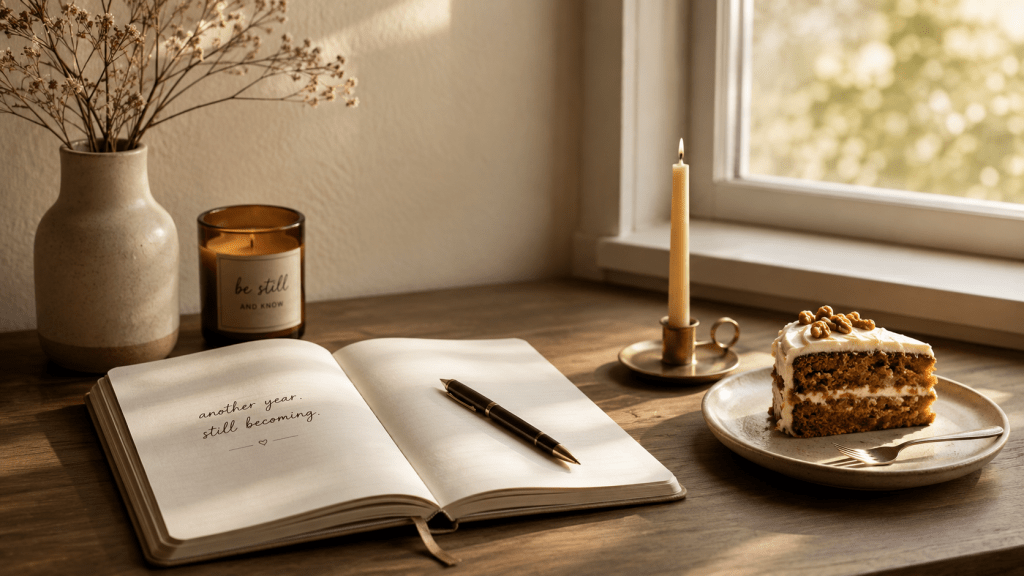
    Another Year, Still Becoming

    There is something strange about a birthday when you are no longer young enough to believe that time is endless, but not yet old enough to stop asking what can still be made from what remains.

    Another year has gone by.

    Usually, those words pass through me with a familiar feeling. A small accounting. A quiet glance backward. A brief pause before returning to the ordinary rhythm of the days. But this year feels different. Not louder. Not grander. Not wrapped in some sudden revelation or clean transformation.

    Just different.

    Quieter.

    Closer to the truth.

    I have been slowly becoming the person I once hoped I might be. Not in the polished way people talk about change when they want it to sound easy. Not in the clean language of motivation, where every wound becomes a lesson, and every loss becomes fuel. Real becoming is messier than that. It does not always arrive with applause. Sometimes it looks like sitting alone with a thought you used to run from. Sometimes it looks like writing one honest sentence and feeling your chest tighten because the page now knows something you were trying not to admit.

    For a long time, I carried things instead of naming them.

    Pain. Sorrow. Anger. Disappointment. The old ache of being misunderstood. The quiet exhaustion of trying to explain yourself to people who had already decided who you were.

    I kept too much inside.

    That is a dangerous kind of storage. The body becomes a basement. The mind becomes a locked room. The heart becomes a pantry full of old things nobody has touched, but everybody can smell. You think you are protecting yourself by not opening the door. But silence does not preserve pain. It ferments it.

    People say writing helps.

    I had heard that for years.

    Write it down. Get it out. Put it on the page.

    It sounded too simple to be true. Too soft. Too neat. The kind of advice people offer when they do not know what else to say. But this year, I learned there is a difference between hearing something and finally understanding it in your bones.

    Writing does help.

    Not because the page fixes everything. It does not. The page is not a miracle worker. It will not reach backward and undo what happened. It will not make childhood kinder, grief lighter, or disappointment less sharp. But the page gives the pain a place to stand outside of you.

    That matters.

    There are things I have written that no one will ever see. Things too private for public life. Things that belong only to me and the silence that held me while I wrote them. And maybe that is the point. Not everything has to be published to be powerful. Not every wound has to become content. Not every confession needs an audience.

    Some writing is not for the world.

    Some writing is how you survive yourself.

    This year, I learned how to write without holding back. Or at least, I began to learn. I started putting down the things I had been carrying in secret. The thoughts that came in the dark. The old sorrows with familiar faces. The questions that do not have clean answers.

    And somehow, in putting them down, I left some of them behind.

    Not all.

    I know better than that now.

    Healing is not a dramatic exit. It is not the door slamming shut behind pain while you walk into the sunlight reborn. Sometimes healing is smaller than that. Sometimes it is realizing that a memory no longer controls the whole room. Sometimes it is noticing you can speak of something that once broke you without breaking again. Sometimes it is simply waking up and discovering that yesterday’s sorrow did not take all of today.

    There are pains I have left behind.

    There are sorrows I no longer feed.

    I can now look at old versions of myself with compassion instead of shame.

    That is no small thing.

    We live in a world that loves measurement. Numbers. Milestones. Income. Followers. Weight lost. Books sold. Goals achieved. Proof, proof, proof. We are told to become better, but usually in ways that can be photographed, posted, monetized, or turned into a lesson for strangers.

    But some of the most important growth is invisible.

    No one claps when you stop hating yourself in one small area.

    No one sends flowers when you choose patience instead of anger.

    No one gives you a certificate for writing the truth in a private notebook and choosing not to drown in it.

    Still, these things count.

    They may be the only things that truly count.

    I still have goals. I still want to write better. I still want my work to reach people. I still want the sentences to carry more truth, more weight, more tenderness. I still want to build something that lasts beyond me, something my descendants might one day hold and say, He was here. He tried to tell the truth. He tried to leave a light on.

    But my goals feel different now.

    Less like a punishment.

    Less like a whip.

    Less like a scoreboard I use against myself.

    My current goal is simple.

    To be better.

    A better writer.

    A better person.

    That sounds plain, almost too plain. But there is depth in plain things. A pot of beans. A clean table. A quiet morning. A sentence that does not lie. The older I get, the more I trust what does not need decoration.

    To be better does not mean to become perfect.

    I am not interested in that kind of performance.

    Perfect people are usually hiding something. Or selling something. Or both.

    To be better means to be more honest than I was. More patient. More disciplined. More willing to listen. More willing to admit when I am wrong. More willing to soften without becoming weak. More willing to stand firm without becoming cruel.

    It means learning that strength is not always volume.

    It means understanding that manhood is not the absence of tenderness.

    It means knowing that pain may have shaped me, but it does not have to govern me.

    And it means accepting that none of this happens overnight.

    There is a kindness in that realization. A mercy. We are not finished products. We are not machines waiting for the correct program. We are living things. We grow unevenly. We bend toward light when we can. We carry damage in our rings like old trees. Some seasons produce fruit. Some seasons only teach the roots to hold.

    This year, I think I learned something about roots.

    I learned that private work matters.

    The unseen work matters.

    The quiet effort made when no one is watching matters.

    The sentence was written and deleted. The memory faced and survived. The apology is considered. The old anger questioned. The small promise kept. The day endured without giving up on yourself.

    These are not small things.

    They are the architecture of becoming.

    So this birthday does not feel like a celebration in the usual sense. I do not need noise. I do not need spectacles. I do not need the day to prove my worth through attention.

    What I want is quieter.

    A good meal.

    A little music.

    A clean room.

    A page.

    A moment to look at the man I was, the man I am, and the man I am still trying to become.

    And maybe that is enough.

    Maybe another year is not just a reminder that time is passing.

    Maybe it is also evidence.

    Evidence that I stayed.

    Evidence that I changed.

    Evidence that some part of me, even in the worst seasons, kept reaching toward the life I had not yet learned how to live.

    I am still becoming.

    Not quickly.

    Not perfectly.

    But honestly.

    And this year, that feels like a gift.

    Kyle J. Hayes

    kylehayesblog.com

    Please like, comment, and share

    Resources for Hard Times

    If you’re looking for practical help, food support, or community resources, you can visit the Salt, Ink & Soul Resources Page.

    πŸ‘‰Β Resources for Hard Times

  • The Theater Forgot to Sing

    The Theater Forgot to Sing

    I loved the new Michael.

    I want to begin there plainly.

    Not with an argument.

    Not with a defense.

    Not with the careful language people sometimes reach for when something connected to memory, fame, Blackness, childhood, music, and history walks back into the room.

    I loved it.

    The songs moved me.

    Not in some distant, critical way. Not the way a person listens to music after they have read all the books, watched all the interviews, studied all the contradictions, and learned how to hold admiration at arm’s length. I mean, the songs moved me in the old way. The body-before-language way. The way music enters through some door you forgot was still open.

    At fifty-five, I do not hear those songs as artifacts.

    I hear them as weather.

    I hear them as radio coming through a kitchen that probably smelled like something frying, or boiling, or being stretched into enough. I hear them from the backseat of cars where adults controlled the dial, and children learned the world through whatever sound came through the speakers. I hear them on Saturday morning, as vinyl, as television, as that strange and beautiful era when even a cartoon version of the Jackson 5 felt like an event. I remember that cartoon. I remember what it meant to see Black children animated into joy, color, rhythm, and possibility.

    Maybe that sounds small to someone who did not come up that way.

    It was not small.

    There are certain things you do not understand as history when you are living them. You only know that they are there. You only know that they have become part of the wallpaper of your becoming. The music played, and you were young. The world was not simple, but for three minutes at a time, it had a beat. It had a hook. It had a high note that made you think the ceiling could be negotiated.

    So when I sat in that theater, I was not just watching a film.

    I was sitting with a younger version of myself.

    The boy who heard those songs before he knew how complicated people could be. The boy who watched the Jackson 5 cartoon without needing permission. The boy who did not yet understand how memory works, how it stores light right next to shadow, how it refuses to separate joy from the time that gave it to you.

    The theater itself was nice. Comfortable. Clean. Respectable.

    The audience was attentive and respectful.

    And that, oddly enough, became my problem.

    Because as a Black American, I know how we can be in a movie theater. And I will be honest: sometimes it bothers me. Sometimes the talking is too much. Sometimes the commentary arrives before the scene has finished breathing. Sometimes the theater becomes less a place of watching and more a place of public performance.

    There are times when I want quiet.

    There are times when I want people to sit down, hush, and let the movie do what it came to do.

    But this time, sitting in all that good behavior, I found myself missing the very thing I sometimes complain about.

    I had heard stories of other audiences singing along. People are dancing in their seats. People clapped when the old songs came alive. People who understood that certain music was never meant to be consumed silently, like medicine taken alone in a dark room. Some songs are communal property. Some songs do not belong to the screen once they begin. They belong to everybody who survived long enough to remember them.

    And I wished I had been there.

    I truly did.

    I wished I had been in the theater where somebody forgot themselves during a chorus. Where an auntie somewhere in the middle row could not help but sing. Where somebody’s foot betrayed them. Where the room stopped pretending it was only an audience and became, for a little while, a family reunion without potato salad, folding chairs, or somebody arguing over who made the greens.

    Because I would have joined in.

    I know that now.

    The part of me that usually wants order would have stepped aside. The part of me that loves silence would have understood that this was not noise. This was testimony. This was memory refusing to stay seated. This was the body remembering what the mind had tried to file away.

    There is a difference between disruption and communion.

    There is a difference between people being rude and people being careless.

    And maybe that is what I wanted.

    To be carried.

    Not just entertained. Not simply impressed. Carried backward and forward at the same time. Back to the radio. Back to the cartoon. Back to the sound of a people finding brilliance in children, rhythm in hardship, spectacle in discipline, and magic in a world that did not always make room for Black genius unless it could first package it, sell it, and survive off the shine.

    Michael’s music, especially for those of us who grew up with it, is not just celebrity memory. It is part of the architecture. It was in the rooms we lived in. It was in the cars. It was at family gatherings. It was on television when television still felt like a shared national fireplace. It gave us something to marvel at.

    And Black people know what marveling means.

    We know what it is to look at one of our own doing something impossible and feel, for a moment, that the impossible has been slightly revised.

    That is why the respectful silence felt incomplete to me.

    Not wrong.

    Just incomplete.

    Maybe it was only my particular audience. Maybe I caught the quiet room. Maybe everyone else was feeling what I was feeling, but had been trained, like me, to behave. Maybe we were all sitting there with songs rising in our chests, politely swallowing them back down.

    There is something sad about that.

    Not tragic. Just sad.

    Because sometimes respect can become another kind of restraint. Sometimes we are so careful not to disturb the room that we forget we are allowed to be alive in it. Sometimes adulthood teaches us to sit still during the very songs that once taught us how to move.

    I left the theater grateful, but also a little hungry.

    Hungry for the version of the experience where the room loosened. Where people remembered they had bodies. Where nostalgia wasn’t treated like a museum piece behind glass, but like something you could clap along to. Something you could sing wrong and still mean with your whole heart.

    Maybe that is why I believe I will go see it again.

    Not because I missed the film.

    Because I may have missed the room I was supposed to see.

    I want another chance to sit among people who remember. People who know that certain songs do not simply play. They open a door. And when that door opens, the child in you steps through first.

    At fifty-five, that child is still there.

    Older now. Quieter. More careful. More aware of the cost of everything.

    But still there.

    Still listening.

    Still remembering the radio.

    Still remembering the cartoon.

    Still waiting for the room to sing.

    Kyle J. Hayes

    kylehayesblog.com

    Please like, comment, and share

    Resources for Hard Times

    If you’re looking for practical help, food support, or community resources, you can visit the Salt, Ink & Soul Resources Page.

    πŸ‘‰Β Resources for Hard Times

  • What’s a thing you were completely obsessed with as a kid?

    What’s a thing you were completely obsessed with as a kid?

    Daily writing prompt
    What’s a thing you were completely obsessed with as a kid?

    Books.

    That is the easy answer.

    The truer answer is escape.

    Not escape in the weak sense. Not running away because I could not face the world. More like finding a door where no one else had thought to put one. A door hidden in paper. A door stitched into panels of color and speech bubbles, into capes and impossible cities, into heroes who were wounded but still stood up when the moment demanded it.

    I started with comic books.

    They were bright, loud, impossible things. Men and women dressed like thunder. World’s ending every few pages. Cities held together by courage, guilt, grief, and the stubborn belief that somebody still had to do the right thing, even when doing the right thing cost them something.

    I did not know it then, but I was studying.

    I was learning pacing.

    I was learning myth.

    I was learning how pain could be given shape without being named too plainly.

    Then came fantasy.

    Kingdoms. Forests. Chosen ones. Old magic buried beneath ordinary soil. A sword pulled from silence. A child discovering that the world was larger, stranger, and more dangerous than anyone had warned them. Fantasy taught me that reality was not always the deepest truth. Sometimes a dragon was not just a dragon. Sometimes it was fear. Sometimes it was inheritance. Sometimes it was the thing waiting at the edge of childhood, breathing smoke.

    Then came science fiction.

    Stars. Machines. Strange planets. Futures built from the anxieties of the present. Science fiction taught me that imagination could ask hard questions without raising its voice. What makes us human? What do we owe one another? What happens when progress outruns wisdom? What happens when we build new worlds and carry the same old wounds into them?

    I read anything I could get my hands on.

    Anything.

    There was hunger in it.

    Not the kind that complains. The kind that searches cabinets when no one is looking. The kind that learns to make a meal out of whatever is available. I consumed stories that way. Greedy, grateful, half-starved for elsewhere.

    And sometimes, when the book was right, when the room was quiet enough, when the world had loosened its grip on me for a little while, I stopped reading.

    I was there.

    I could see it.

    The dust on the road. The flicker of torchlight. The broken starship wall humming in the dark. The hero’s hand trembling before the final choice. The old mentor already knowing the cost. The enemy not entirely wrong. The child standing at the edge of becoming, afraid to step forward and more afraid not to.

    That was the magic.

    Not that books showed me other worlds.

    But that they made me feel as if I had survived them.

    Now I do not read as much about the world’s other people as I used to. Not because I love them less. Maybe because some part of me finally understood what all that reading had been preparing me for.

    I was not only visiting.

    I was apprenticing.

    Every comic book, every fantasy kingdom, every distant planet was placing a tool in my hand. Teaching me how to build. Teaching me how to listen. Teaching me that a world is not made only of maps and names and invented histories.

    A world is made of longing.

    A world is made of rules and wounds.

    A world is made of what people fear, what they worship, what they hide, what they carry, and what they are willing to lose.

    These days, I am trying to create my own.

    Not because I have forgotten the ones that raised me.

    Because I remember them.

    Because I owe them.

    Because somewhere there may be another child sitting in a room too hot in summer, too cold in winter, holding a book like it is a secret passage out of the life they have been handed.

    And maybe one day, if I do this right, they will open something I made.

    And for a little while, they will not simply be reading.

    They will be there.

    Kyle J. Hayes

    kylehayesblog.com

    Please like, comment, and share

    Resources for Hard Times

    If you’re looking for practical help, food support, or community resources, you can visit the Salt, Ink & Soul Resources Page.

    πŸ‘‰Β Resources for Hard Times

  • If I had to describe my ideal life, it would be quiet.

    If I had to describe my ideal life, it would be quiet.

    Daily writing prompt
    If you had to describe your ideal life, what would it look like?

    Not empty.

    Not lonely in the way people sometimes imagine loneliness.

    Just quiet.

    A small life, perhaps. At least from the outside. Not much noise. Not much clutter. Not much reaching for things I never truly wanted. A home with only what I need. A few good meals. A place to write. A place to sit. A window where the light comes in, honestly, without asking anything of me.

    I have learned that some people dream of more.

    More rooms. More noise. More invitations. More proof that they are alive because the world keeps calling their name.

    But I have always been drawn to less.

    Less interruption.

    Less performance.

    Less pretending that constant movement is the same thing as purpose.

    During the COVID lockdown, when the world grew afraid of stillness, I found something in it that felt almost like mercy. I know that may sound strange. I know isolation is not always healthy. I know people suffered. I know silence can become a room with no door if we stay inside it too long.

    But there was something about that quiet.

    The roads softened. The days slowed down. The world stopped demanding that everyone be everywhere at once. For a little while, life lost its appetite for spectacle.

    And in that space, I could think.

    I could hear myself.

    Not the self I perform for others. Not the self shaped by obligation or expectation. The quieter one. The one beneath the noise. The one who had been waiting for the world to hush long enough to speak.

    My ideal life would not be a complete withdrawal from people. I do not believe we are meant to disappear from one another entirely. But I would want a life where connection is chosen, not forced. Where peace is not treated like laziness. Where stillness is not mistaken for failure.

    I would want simple food made with care. Books close by. Music when I need it. Silence when I need that more.

    I would want mornings that do not begin in panic.

    I would want evenings that do not leave me exhausted.

    I would want enough.

    Not abundance as the world defines it.

    Enough space.

    Enough time.

    Enough quiet.

    Enough peace to become myself fully.

    Kyle J. Hayes

    kylehayesblog.com

    If this found you at the right time,

    Feel free to like, comment, or share it with someone who might need it too.

    Resources for Hard Times

    If you’re looking for practical help, food support, or community resources, you can visit the Salt, Ink & Soul Resources Page.

    πŸ‘‰Β Resources for Hard Times