Tag: Kindness

  • Fear Is Not a Teacher

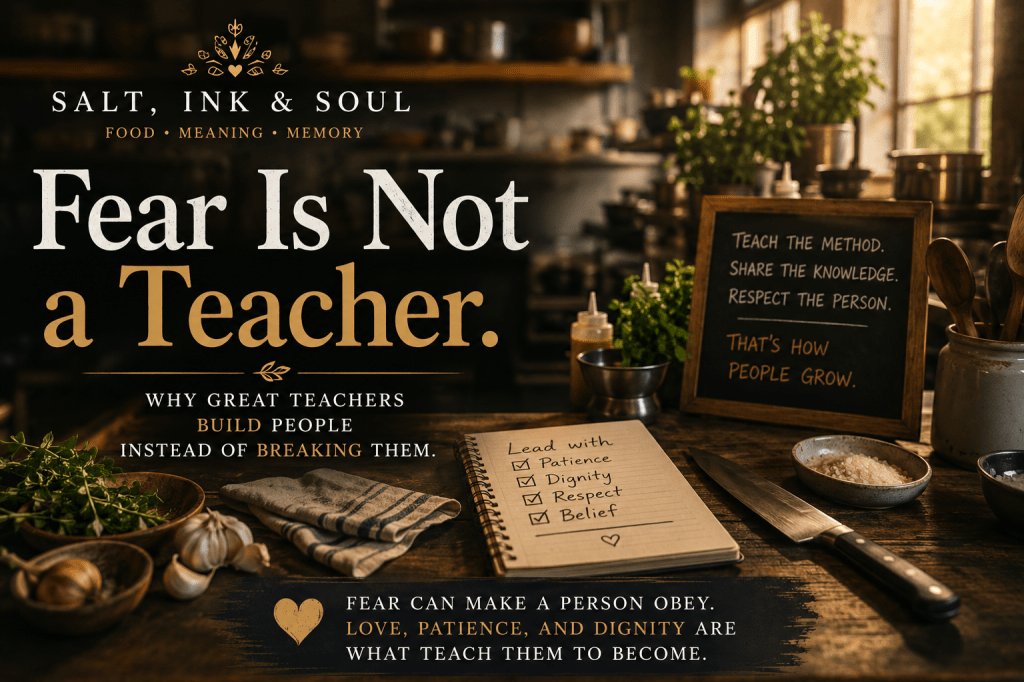
    Fear Is Not a Teacher

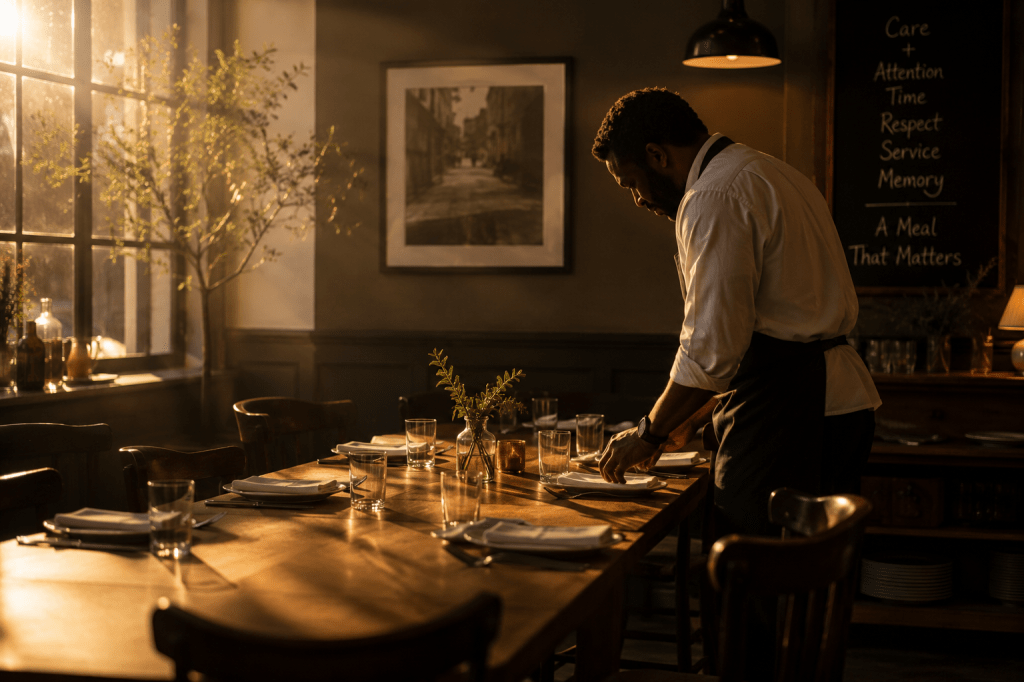
    As I have said before, I have been watching The Bear.

    Not quickly.

    The show is often too intense for me to sit through all at once. I watch for a while, feel the pressure building in the room, and eventually step away. Sometimes I come back later that evening. Sometimes another day.

    There is much about the show I admire.

    The food.

    The discipline.

    The quiet beauty of people trying to make something precise in a world that rarely is.

    But there is one thing I continue to struggle with.

    Why are so many of the people who are supposed to be good at their work also written as though cruelty is part of the uniform?

    Why does talent so often arrive shouting?

    Why must skill enter the room convinced it is a god?

    Perhaps this is only television. Perhaps the writers believe conflict is more interesting than kindness, and humiliation makes better drama than patience. Maybe Hollywood has decided that every great kitchen must be run like a battlefield, every chef must carry the emotional habits of a tyrant, and every young cook must first be broken before they can be trusted to create anything beautiful.

    But I do not believe people have to be broken to become better.

    I believe broken people often spend years trying to recover from those who claimed to be helping.

    I know something about that.

    I suffered abuse as a child.

    I experienced abuse in the military.

    I knew some of it in marriage.

    The settings changed. The language changed. The uniforms changed. But fear has a familiar shape.

    It teaches you to be afraid.

    It does not teach you how to grow.

    That distinction matters.

    Some people will tell you fear made them stronger. Some will say the shouting sharpened them, that humiliation prepared them, that being treated like garbage was the price of excellence.

    I do not doubt their experience.

    But surviving a method does not prove the method was good.

    A person can learn while being mistreated. Human beings are remarkably adaptive. We learn in war zones. We learn in broken homes. We learn beneath bosses who mistake intimidation for leadership.

    But that does not mean the abuse was necessary.

    It means the person found a way to keep growing despite it.

    Too often, we give the cruelty credit for the strength that belonged to the survivor.

    That is one of the oldest tricks in power’s playbook.

    It wounds you, then takes credit for the scar tissue.

    I keep returning to a simple question:

    How do you teach someone who is constantly afraid of you?

    Not how do you make them obey.

    How do you actually teach them?

    Fear narrows the world.

    It makes the mind concentrate on survival. A frightened person is not free to be curious. They are not free to experiment. They are not free to ask the question that might sound foolish but lead somewhere useful.

    They are watching you.

    They are waiting for the next explosion.

    They are trying not to become the day’s example.

    That may produce compliance.

    But compliance is not mastery.

    Fear can teach a person how to avoid mistakes in front of you. It does not always teach them how to understand the work when you are gone.

    Real teaching requires safety.

    Not comfort at all times. Not lowered standards. Not endless praise.

    Safety.

    The kind that allows a person to say, “I don’t understand.”

    The kind that permits them to make an honest mistake without wondering whether their dignity will be taken as payment.

    A good teacher can be demanding.

    But there is a difference between demanding excellence and demanding submission.

    One develops the student.

    The other feeds the ego of the person in charge.

    I think we often confuse the two because arrogance photographs well.

    The shouting chef looks powerful.

    The patient teacher looks ordinary.

    There is nothing glamorous about that kind of instruction.

    It is slow.

    It requires restraint.

    It asks the person with authority to remember that knowledge is not a crown. It is something passed from one pair of hands to another.

    That may be the harder discipline.

    Anyone can humiliate someone who knows less.

    It takes no genius to make a beginner feel small.

    They have already entered the room uncertain. They already know they are behind. Their hands may shake. Their timing may be wrong. Their questions may expose how far they still have to go.

    The easiest thing in the world is to use your experience as a weapon against them.

    The better thing is to use it as shelter.

    To say: I remember not knowing.

    Let me show you again.

    That does not make the standard weaker.

    It makes the teacher stronger.

    I sometimes wonder how many gifted people walked away from their calling because the first person entrusted to guide them decided cruelty was tradition.

    How many cooks stopped cooking.

    How many artists stopped drawing.

    How many children stopped raising their hands.

    How many soldiers learned to hide pain because someone convinced them that being human was a defect.

    We count the ones who endured and call the system effective.

    We rarely count the ones it drove away.

    That is the trouble with cultures built on abuse. They display the survivors as evidence and bury the casualties in silence.

    We see this in kitchens, offices, homes, schools, locker rooms, military units, and marriages.

    The setting changes.

    The wound remains familiar.

    Someone says they are only trying to help.

    Someone says this is how excellence is made.

    Someone says you are too sensitive.

    And after enough time, you begin to wonder whether dignity is something you must surrender to improve.

    It is not.

    You are allowed to learn without being degraded.

    You are allowed to be corrected without being crushed.

    You are allowed to stand in the presence of someone more skilled without kneeling before their ego.

    We should not reward people merely because they are brilliant at the visible part of their work.

    A chef can prepare a magnificent plate and poison the room around it.

    A leader can meet every target and leave everyone beneath them diminished.

    A teacher can know everything about the subject and nothing about the people sitting in front of them.

    Skill matters.

    But skill without humanity is incomplete.

    There is no meal so beautiful that it excuses contempt.

    No achievement so great that it makes cruelty noble.

    No level of expertise that turns another person into something disposable.

    Perhaps that is what I wish more stories understood.

    The most remarkable person in the room is not always the one who can do what no one else can.

    Sometimes it is the one who knows more and still chooses gentleness. 

    The one who remembers that the person standing in front of them is not raw material to be broken into shape.

    They are already a human being.

    The work is to help them become more fully themselves.

    I still watch The Bear.

    I still admire the craft.

    I still want to see what comes out of those kitchens.

    But I find myself hoping for something beyond the perfect plate.

    I want to see a room where excellence does not require casualties.

    A place where the lesson is not carried on the back of fear.

    A kitchen where people are expected to learn, but are not required to suffer for the privilege.

    Because fear may make someone move.

    But if what we want is for people to grow, to think, to create, and eventually to teach someone else, then we must give them something fear never can.

    Room to become good without first being made to feel worthless.

    That is not softness.

    That is instruction.

    Fear can make a person obey.

    Love, patience, and dignity are what teach them to become.

    Kyle J. Hayes

    kylehayesblog.com

    Please like, comment, and share

    Resources for Hard Times

    If you’re looking for practical help, food support, or community resources, you can visit the Salt, Ink & Soul Resources Page.
    👉 Resources for Hard Times

  • Things That Shape Us

    Things That Shape Us

    I have often wondered whether we become who we are because of something already inside us, or because of everything life places in our path.

    The older I get, the more I believe our experiences shape us.

    Before we learn to trust, someone has to give us a reason to.

    Before we become cautious, someone usually gives us one of those too.

    Every conversation, every disappointment, every unexpected kindness leaves something behind. We carry those moments longer than we realize. They become the lens through which we see the world, often without our permission.

    Our experiences influence who we trust. They affect how we speak to strangers, how quickly we forgive, and how willing we are to believe in people we have just met. They determine the places that feel like home and the ones we never want to return to. They shape what makes us feel safe, what makes us nervous, and what makes us hopeful.

    Even the smallest moments matter.

    A teacher who believed in us when no one else did.

    A friend who stayed.

    A parent who listened.

    A stranger who offered kindness on a day we desperately needed it.

    Just as those moments shape us for the better, so do the painful ones. Betrayal teaches caution. Loss teaches gratitude. Failure teaches resilience. Heartbreak can teach compassion, because once you’ve carried that kind of weight, you begin to recognize it in someone else.

    That doesn’t mean we are trapped by our experiences.

    I believe we always have a choice.

    We can decide that someone else’s bitterness will not become our own. We can choose to offer patience in response to impatience. We can become the kindness we wished someone had shown us years ago.

    Maybe that is where character is truly found.

    Not in pretending our experiences never happened, but in deciding what we will do with them.

    Because every experience leaves its fingerprint on us.

    Some become scars.

    Some become wisdom.

    And if we’re fortunate, the hardest moments don’t simply change who we are.

    They help us become someone worth becoming.

    Kyle J. Hayes

    kylehayesblog.com

    Please like, comment, and share

    Resources for Hard Times

    If you’re looking for practical help, food support, or community resources, you can visit the Salt, Ink & Soul Resources Page.

    👉 Resources for Hard Times

  • They’ll Remember More Than the Score

    They’ll Remember More Than the Score

    Well…

    We didn’t get them this time.

    As someone very new to soccer, I have to admit I was disappointed to see the USMNT’s World Cup journey come to an end. Like so many Americans, I had started believing. Every match pulled me in a little deeper. Every victory made me think, “Maybe this is our year.”

    It wasn’t.

    But if there is one phrase Americans know almost by heart, it’s:

    We’ll get them next time.

    There is hope tucked inside those words.

    Not denial.

    Not pretending we didn’t lose.

    Just the belief that another opportunity is coming.

    Another chance.

    For me, something unexpected happened during this World Cup.

    I didn’t just discover a tournament.

    I discovered a sport.

    A few months ago, I couldn’t have told you much about formations or tactics. Today, I find myself checking match schedules, watching highlights, learning the game’s rhythm, and already looking forward to the next World Cup.

    That feels like a gift.

    One I didn’t know I was missing until someone handed it to me.

    Even though Team USA is no longer playing, something beautiful is still happening.

    The World Cup is still here.

    The matches continue.

    And so do the people who traveled thousands of miles to experience them.

    Over the past few weeks, I’ve watched countless videos of supporters from Europe, South America, Africa, Asia, and beyond sharing their experiences here in the United States. What struck me wasn’t just their excitement over the matches.

    It was how often they talked about the people.

    The conversations with strangers.

    The restaurant recommendations.

    The unexpected hospitality.

    For all the stories people hear about America before they arrive, many leave talking about something entirely different.

    They leave talking about us.

    Not politicians.

    But People.

    Ordinary Americans.

    The cashier who wished them luck before the match.

    The server who recommended the best local barbecue.

    The family who invited them into a conversation.

    The stranger who pointed them toward the right train.

    The fan who celebrated beside them even though they spoke different languages.

    That is an America I know.

    The America where neighbors wave.

    Where someone stops to help you change a tire.

    Where a plate of food somehow finds its way into your hands if you’ve been around long enough.

    Where we may argue among ourselves, but we still know how to welcome a guest.

    No, we don’t have to go out of our way.

    No one is requiring it.

    But I hope we do anyway.

    Not because we are trying to prove something.

    Because hospitality has always been one of the quiet strengths of ordinary people.

    Governments introduce nations.

    People define them.

    Long after the final trophy is lifted, many of these visitors won’t remember every score.

    But they will remember how they were treated.

    They’ll remember the conversations that made them laugh.

    The meals they shared.

    The cities they explored.

    The strangers who became friends for an afternoon.

    Those memories travel farther than any goal ever could.

    I’m disappointed that Team USA’s run has ended.

    I wanted to see them go farther.

    I wanted to keep cheering.

    But I’m grateful all the same.

    Grateful that this tournament introduced me to a sport I never expected to love.

    Grateful that one conversation opened the door to something new.

    And grateful that the rest of the world still has a chance to experience something that has always existed beyond the headlines.

    The America we know.

    The America we build every day with kindness, generosity, and simple conversations between strangers.

    The world is still watching.

    Let’s give them something beautiful to remember.

    Kyle J. Hayes

    kylehayesblog.com

    Please like, comment, and share

    Resources for Hard Times

    If you’re looking for practical help, food support, or community resources, you can visit the Salt, Ink & Soul Resources Page.
    👉 Resources for Hard Times

  • Who Are You Most Inspired By?

    Who Are You Most Inspired By?

    The person who inspires me most is Fred Rogers.

    Not because he was famous.

    Not because generations of children grew up watching him.

    And not because he seemed to have all the answers.

    He inspires me because he knew exactly who he was and never seemed interested in becoming someone else.

    In a world that often rewards loud voices, he spoke softly.

    In a world that celebrates outrage, he chose kindness.

    In a culture that often mistakes cynicism for wisdom, he believed people were worth caring about.

    What strikes me most is that he did what he truly loved. He found a way to use his gifts in the service of others and then spent decades doing exactly that. He did not seem to chase trends, popularity, or approval. He held fast to his convictions, whether the crowd agreed or not.

    That kind of consistency is rare.

    Many of us spend years trying to figure out who we are. Others know who they are but are afraid to live it. The pressure to fit in, to be accepted, or to be successful on someone else’s terms can be overwhelming.

    Yet he seemed content to walk a different path.

    A path built on the belief that every person has value.

    As I’ve gotten older, I’ve come to admire that more than talent, wealth, or fame. The people who leave the deepest mark on the world are often the ones who make others feel seen. They remind us that kindness is not weakness, that compassion requires courage, and that treating people with dignity is a worthy life’s work.

    When I think about the kind of person I hope to become, I don’t think about being the smartest person in the room or the most successful.

    I think about being useful.

    I think about leaving people better than I found them.

    That is why he inspires me.

    Not because he changed the world through power.

    But because he changed it through service, one person at a time.

    Kyle J. Hayes

    kylehayesblog.com

    Please like, comment, and share

    Resources for Hard Times

    If you’re looking for practical help, food support, or community resources, you can visit the Salt, Ink & Soul Resources Page.
    👉 Resources for Hard Times

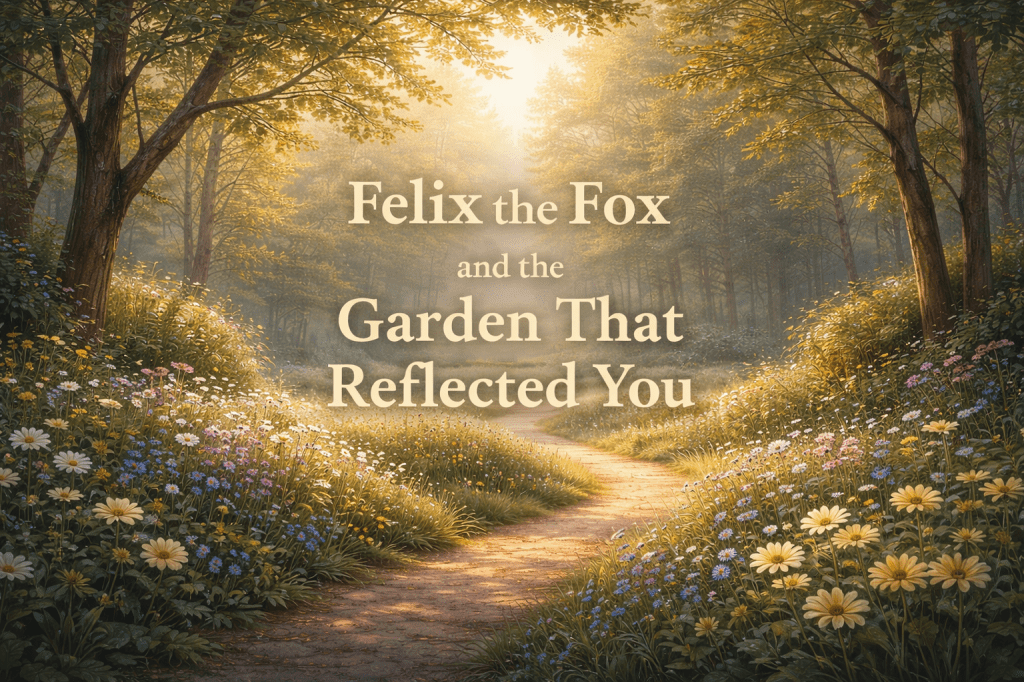
  • Felix the Fox and the Garden That Reflected You

    Felix the Fox and the Garden That Reflected You

    There was a garden tucked deep inside the Whispering Woods that most creatures walked past without noticing.

    Not because it was hidden—but because it waited to be found.

    Felix the Fox noticed it one morning when the light fell differently between the trees. The air felt softer there, as if the forest itself had taken a breath and decided to hold it.

    “This place feels like it’s listening,” Felix said.

    The garden did not answer.

    It didn’t need to.

    Felix wasn’t alone. Maple the Rabbit hopped beside him, curious and open, while nearby, Bristle the Magpie watched carefully, wings tucked tight against her sides. Bristle liked shiny things. She liked keeping them close. It made her feel safe.

    The garden seemed to notice that, too.

    A gentle path appeared beneath Felix’s paws—wide enough for more than one, marked by flowers that leaned outward, as if inviting company.

    Maple followed easily.

    Bristle hesitated.

    Her path was different. It shimmered faintly, scattered with small, glinting objects half-buried in the soil. Each one caught the light just right.

    Bristle gathered them quickly.

    The more she collected, the quieter the garden became.

    Felix’s path felt heavier at first. He found fallen branches blocking the way, thorny vines tangled where others might stumble. But each time he paused, Maple or another forest friend appeared—not summoned, just arriving.

    Together, the work became lighter.

    The flowers along Felix’s path grew brighter, not because he cleared it alone, but because he never did.

    Bristle reached a clearing first.

    In the center stood a smooth pool of water, still as glass. She leaned over it, expecting to see something shining back at her.

    Instead, she saw herself alone—wings full, paws empty.

    The garden did not scold.

    It simply waited.

    Farther along, Felix reached his own clearing. When he looked into the pool, he didn’t see just himself. He saw Maple laughing. Bramble helping. Piper perched nearby, humming softly.

    The water seemed to whisper:

    What you share stays with you.

    Bristle listened from the edge of the trees.

    Her wings felt heavy now—not with treasure, but with something lonelier.

    She looked back at the path she’d taken. The flowers there had dulled, not angry, just tired.

    Bristle made a choice.

    She returned the shiny things to the soil. Slowly. One by one. Then she followed the sound of voices rather than the sparkle.

    When she reached the others, Felix didn’t say anything.

    He just made room.

    As Bristle helped lift a branch and shared a found trinket instead of keeping it, the garden changed again. Color returned. The air warmed. The path widened.

    The Whispering Woods had noticed.

    By the time they left, the garden looked no different than before—quiet, unassuming, easy to miss.

    But Felix knew better.

    “Some places don’t show you who they are,” he said softly.

    “They show you who you are.”

    The forest seemed pleased with that.

    And long after the garden disappeared behind them, its lesson stayed—growing quietly wherever kindness was chosen over keeping.

    Some gardens don’t grow flowers.

    They grow understanding.

    Kyle J. Hayes

    kylehayesblog.com

    Please like, comment, and share

    Read More Felix Stories.

    👉 Felix Collections