Tag: reflection

  • What Could Have Been

    What Could Have Been

    Thoughts on the life I escaped.

    Maybe escaped is too much. There was no dramatic chase. No single door kicked open. No heroic music swelling in the background while a man heads to the southwest with all his wounds packed neatly in the trunk.

    It was quieter than that.

    It was the kind of escape that happens after years of feeling the walls move closer and closer until one day you realize the room has been shrinking around you. Not because anyone touched the walls. Not because anyone admitted what was happening. But because the life around you had already decided its limits for you, and if you were not careful, you would mistake those limits for destiny.

    I come from the Quad Cities.

    I say that with no hatred.

    A place can wound you and still feed you. A place can raise you and still not have room for you to become. A place can know your name and still never know what lives inside you.

    That is the complicated truth of home.

    People from the outside sometimes imagine the Midwest as simple. Quiet. Polite. Decent. Hardworking. Neighborly. They imagine front porches, snow shovels, church fish fries, factory shifts, Friday night bars, and grocery stores where everybody knows somebody’s cousin.

    And some of that is true.

    But truth is rarely clean.

    The Midwest has a way of hiding its knives in soft cloth.

    The racism was not always loud.

    That was part of the trouble.

    It did not always come wearing a hood or shouting from the street. It came smiling. It came with a handshake. It came with a joke you were supposed to laugh at if you wanted to keep the peace. It came in the silence after you spoke too well. It came in the promotion you were never quite right for. It came in the form of people making you feel grateful for being tolerated.

    Polite racism is a special kind of poison.

    It asks you to pretend you have not been poisoned.

    It asks you to be reasonable. Professional. Mature. Understanding. It asks you to bow your head and call it patience. It asks you to keep working, keep smiling, keep proving, keep swallowing. And because jobs are few and far between, because opportunity is treated like a chair in a crowded room, once you get a seat, you are expected to sit there and be thankful, no matter how hard the wood cuts into you.

    That is how a life gets built smaller than the soul.

    One concession at a time.

    You get a job and keep it.

    Good or not.

    Fair or not.

    Respectful or not.

    You keep it because there may not be another one waiting. You keep it because rent does not care about dignity. Groceries do not care about dreams. The light bill does not lower itself because your spirit is tired. So you learn the mathematics of survival. You calculate the insult against the paycheck. You measure humiliation against health insurance. You teach yourself to be quiet because quiet pays on Friday.

    And then one day, the quiet becomes you.

    That is the thing I fear most when I think about what might have been.

    Not poverty.

    Not struggle.

    Not even failure.

    I fear becoming quiet.

    I fear being a man who learned to live without asking what living was supposed to mean.

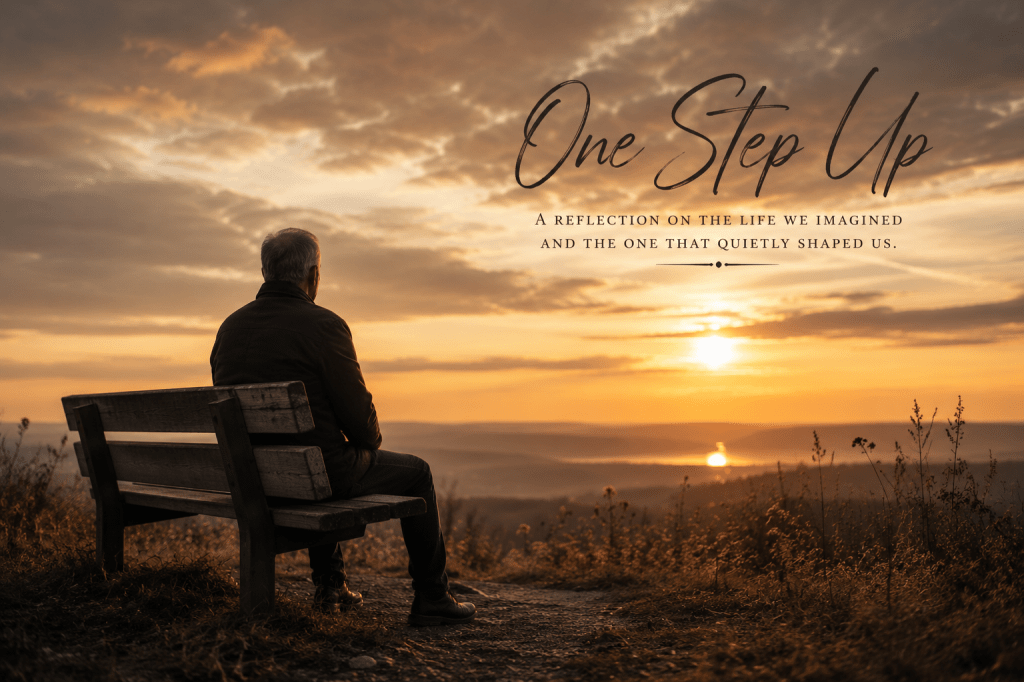
    There is a version of me who stayed.

    I can see him sometimes.

    He is not a bad man. That may be the saddest part. He is not foolish. He is not weak. He is not lazy. He is smart. Maybe too smart for the room and too tired to do anything about it.

    He works because work is what men are told to do. He buys the house he can afford because that is what responsibility looks like from the outside. He keeps his head down. He takes the jokes. He lets certain comments pass through him like winter air through an old window.

    He tells himself this is adulthood.

    He tells himself everybody compromises.

    He tells himself dreams are for people with softer lives.

    And every evening, maybe he ends up in some corner bar where the same songs from the eighties keep playing like time got drunk and forgot to leave.

    Maybe Springsteen comes through the speakers, singing about glory days, and everybody smiles because they know the words. They know the rhythm. They know the ache, even if they would never call it grief.

    But I never wanted to become that man.

    The man sitting under the dim light, nursing a drink, telling the same stories about who he used to be because the present has become too small to speak of. The man who once had promise, once had fire, once had some bright and dangerous thing inside him, but somewhere along the way learned to trade becoming for remembering.

    That was the life I feared.

    Not the bar itself.

    Not the music.

    Not even nostalgia, because memory can be holy when handled with care.

    What I feared was getting trapped there. Becoming fluent in the language of almost.

    Almost left.

    Almost wrote.

    Almost tried.

    Almost became.

    A man with intelligence enough to know the cage had a lock, but not enough courage left to reach for the door.

    Which is to say, a man dying of recognition in a room too small for his questions.

    That is no life.

    Not because bars are bad.

    Not because familiar music is bad.

    Not because staying in your hometown is a failure.

    Some people stay and build beautiful lives. Some people remain and become pillars. There are people whose roots run deep enough to turn the soil around them into fertile ground.

    But for me, staying would have been a kind of burial.

    I know that now.

    The Quad Cities are not ignorant. That is one of the lies people tell about places like that. People are educated there. People read. People think. People work hard. People earn degrees. But a degree is not the key if every door in the city is already full of people waiting for the same narrow opening.

    I have seen baggers at local stores with college degrees.

    That image stays with me.

    Not because honest work is shameful. There is dignity in all work done with care. But there is something brutal about a place where education does not always become movement. Where intelligence gets folded into survival. Where ambition learns to speak softly because there is nowhere for it to go. The local economy can make a person feel ridiculous for wanting more than what is available.

    You learn to lower your voice around your own dreams.

    You stop saying certain things out loud.

    Writing would have been one of those things.

    Writing, in that life, would have sounded absurd. Not because writing is absurd, but because harsh places train people to distrust anything that does not immediately pay the bills. Art becomes suspicious. Expression becomes indulgence. A man saying he wants to write sounds like a man saying he wants to starve beautifully.

    So the dream would have been crushed.

    Not all at once.

    Crushed slowly.

    Under overtime.

    Under politeness.

    Under fatigue.

    Under the need to be practical.

    Under the look people give you when you reveal some secret part of yourself, and they do not know whether to laugh or feel sorry for you.

    I might have stopped writing before I ever truly began.

    That thought troubles me.

    Because now I know what writing has become for me.

    It is not a hobby.

    It is not decoration.

    It is not some charming little side project meant to make me feel interesting.

    Writing is the place where I tell the truth before the world edits it. It is where I gather the broken pieces and make them speak. It is where I take what hurt me and refuse to let it die without meaning.

    But in the life I escaped, meaning might have had to wait.

    And wait.

    And wait.

    Until one day, it forgot my name.

    That is what small lives can do when they are not chosen freely. They do not always destroy you by violence. Sometimes they destroy you by routine. You wake up. You work. You endure. You pay. You sleep. You repeat. You become reliable. You become respected in the acceptable ways. You become the kind of man people point to and say, “He’s doing all right,” while something sacred inside you sits in the dark, starving.

    I could have become that man.

    That is why I do not speak of leaving lightly.

    Leaving was not only about geography.

    Leaving was disobedience.

    It was a refusal to let the place that shaped me become the place that sealed me shut. It was me saying, perhaps before I even had the language, that survival was not enough if survival required the death of everything tender, strange, creative, and true inside me.

    New Mexico did not make me from nothing.

    I brought myself here.

    I brought the scars, the questions, the intelligence, the anger, the hunger, the ache. I brought the boy who read because books were doors. I brought the man who wanted more but did not always believe more was allowed. I brought the Midwestern discipline, the working-class suspicion of easy promises, the memory of what it means to keep going when nothing romantic is happening.

    But New Mexico gave me room.

    And room can feel like grace when you come from a place where every dream had to crouch.

    Here, the sky does not crouch.

    The land stretches out like it is daring you to unclench. The mountains do not ask you to justify your existence. The light falls on everything with a kind of ancient indifference that somehow feels merciful. You can be small here without being erased. You can be quiet without disappearing. You can be alone without being trapped.

    And somehow, in that space, the writing came.

    The life that might have been still visits me sometimes.

    I see the house I could have bought because it was affordable, not because it held my future. I see the job I would have kept because leaving felt too dangerous. I see the polite insults swallowed whole. I see the younger men at the bar becoming older men at the same bar, telling the same stories under the same neon signs while the same songs play and the years pass without asking permission.

    I see myself there.

    And I feel grief.

    Not superiority.

    Grief.

    Because there are many brilliant people trapped in lives too narrow for them. Many gifted people never leave because leaving requires money, courage, timing, madness, or some combination of all four. There are many dreams buried under good sense. Many books have never been written. Many songs have never been sung. Many meals were never made. Many paintings were never painted. Many selves never met.

    The world calls that reality.

    Sometimes it is.

    But sometimes, reality is just a cage everybody’s gotten used to.

    I do not want to romanticize leaving. It costs. It takes things from you. It makes you a stranger. It removes the comfort of being easily understood. It teaches you that reinvention is not clean. There are lonely nights in new places. There are moments when the old life, for all its limits, looks warm simply because it is known.

    But I would rather be lonely in the direction of becoming than comfortable in the direction of disappearance.

    That is the truth I keep returning to.

    If I had stayed, maybe I would have been fine.

    That is the haunting part.

    Fine is a dangerous word.

    Fine can hide a thousand funerals.

    Fine can mean the bills are paid, but the soul has gone quiet. Fine can mean nobody worries about you because you have learned to maintain stability. Fine can mean the dream died so politely that even you forgot to mourn it.

    I did not want to be fine.

    I wanted to be alive.

    Not loud.

    Not famous.

    Not untouched by pain.

    Alive.

    Aware of my own mind. Responsible for my own becoming. Free enough to write badly until I wrote honestly. Free enough to tell the truth. Free enough to sit with the anger and ask whether it was protecting me or imprisoning me. Free enough to discover that I was more than the smartest man in a room I had outgrown.

    That is what New Mexico gave me.

    Or helped me claim.

    A life where writing became possible.

    A life where the old bitterness began to lose its authority.

    A life where the boy who once dreamed in silence could finally put words on the page and let them breathe.

    And maybe that is why New Mexico feels less like a place I moved to and more like the land that let me become. Because I know the life I might have stayed long enough to inherit. I know the man I might have become. And I know, with a gratitude I still cannot fully explain, that I was given room before the dream went quiet.

    I do not hate the place I came from.

    I carry it.

    The Quad Cities are in me. The Midwest is in me. The gray winters. The modest houses. The factory logic. The polite cruelty. The educated frustration. The bars with old songs playing. The people are doing their best with what the place allows. The aching knowledge that intelligence does not always become freedom.

    All of it is in me.

    But it is not over me.

    Not anymore.

    And maybe that is what escape really means.

    Not that you outrun the past.

    But that you live long enough, and choose bravely enough, to stop letting the past decide the size of your future.

    There is a life I did not stay long enough to become.

    I mourn him sometimes.

    I honor him, too.

    Because he reminds me of what was at stake.

    He reminds me that every page I write is not merely a page. It is evidence.

    Evidence that the dream survived the harshness.

    Evidence that the man did not bow his head forever.

    Evidence that the corner bar did not become the whole world.

    Evidence that I left.

    Kyle J. Hayes

    kylehayesblog.com

    Please like, comment, and share

    Resources for Hard Times

    If you’re looking for practical help, food support, or community resources, you can visit the Salt, Ink & Soul Resources Page.
    👉 Resources for Hard Times

  • What does freedom mean to you?

    What does freedom mean to you?

    Daily writing prompt
    What does freedom mean to you?

    I have been enjoying these writing prompts.

    They have been making me stop in places I might have walked past. They ask a simple question, and then the question opens a door. Behind that door is memory. History. Conscience. The quiet little courtroom inside the self where we are forced to admit what we really believe.

    So I looked up the definition of freedom.

    And almost immediately, something came to mind.

    Freedom is for everyone.

    That sounds simple. Almost too simple. The kind of sentence people nod at because it costs nothing to agree with it. But the more I sat with it, the heavier it became.

    Because if freedom is for everyone, then my freedom cannot depend on your suffering.

    My comfort cannot require your silence.

    My opportunity cannot require your exclusion.

    My safety cannot require your fear.

    My voice cannot require your disappearance.

    That is where the word becomes difficult.

    Many people speak of freedom as if it belongs only to the self. As if freedom means, “I get to do what I want.” As if the highest form of liberty is never being questioned, never being inconvenienced, never being asked to consider the life of another human being.

    But that is not freedom.

    That is appetite wearing a flag.

    Real freedom asks more of us. It asks whether the thing we are calling liberty is actually domination with better language. It asks whether our dream has a shadow. It asks whether someone else has been made smaller so we can feel larger.

    And that question matters.

    Because this country has always had a complicated relationship with freedom. It has preached it beautifully and practiced it unevenly. It has written the word into documents, speeches, songs, and prayers, while whole generations had to fight just to be included in the meaning.

    So when I think of freedom, I cannot think of it as only personal.

    I think of breath.

    I think of the ability to live without someone else’s hand on your future. I think of being able to tell the truth without punishment. I think of being able to love your people, raise your children, feed your family, worship or not worship, move through the world, and not have your humanity treated like a debate.

    Freedom means room.

    Room to become.

    Room to rest.

    Room to fail without being destroyed.

    Room to be more than what someone else decided you were allowed to be.

    But it also means responsibility.

    Freedom that only works for people like me is not freedom.

    It is a locked door with my name on the key.

    So what does freedom mean to me?

    It means the right to become fully human without making someone else less human in the process.

    It also means no one’s dignity should be the price of another person’s comfort.

    Kyle J. Hayes

    kylehayesblog.com

    If this found you at the right time,

    Feel free to like, comment, or share it with someone who might need it too.

    Resources for Hard Times

    If you’re looking for practical help, food support, or community resources, you can visit the Salt, Ink & Soul Resources Page.
    👉 Resources for Hard Times

  • When the Neighborhood Song Finds You Again

    When the Neighborhood Song Finds You Again

    There are nights when adulthood feels heavier than it should.

    No catastrophe.

    No crisis that would make the evening news.

    Just the quiet pressure that settles in your chest after years of carrying things you rarely speak about. Bills. Expectations. The slow arithmetic of responsibility. The strange loneliness that can exist even when you’re surrounded by people.

    People like to say, ” Just talk to someone.

    And sometimes that’s good advice.

    But the truth adults rarely admit is that it isn’t always that simple.

    Sometimes you don’t know how to explain what you’re feeling. Sometimes the words are tangled. Sometimes the weight is vague—more like weather than injury. A fog rolling in without asking permission.

    Tonight was one of those nights for me.

    The kind where the mind circles the same questions again and again. Where the quiet in the house feels louder than usual. Where you sit with yourself and realize that being an adult often means being the one expected to have answers—even when you feel like the smallest person in the room.

    So I did something simple.

    I opened YouTube.

    Not looking for wisdom. Not looking for motivation or productivity advice or someone promising to unlock the secret to success in ten easy steps.

    Just something gentle.

    And somehow I landed on a channel filled with old episodes of Mr. Rogers’ Neighborhood.

    The moment the music started, something happened that I didn’t expect.

    That piano.

    That calm rhythm.

    That familiar invitation into a living room that somehow always felt safe.

    “It’s a beautiful day in the neighborhood…”

    Before I knew it, I was smiling.

    Not the polite smile adults wear in public. The real kind. The one that sneaks up on you when a memory taps you on the shoulder.

    I started singing along.

    And somewhere between the first line and the moment he changed his shoes, something inside me loosened. The stress that had been sitting in my chest all evening dissolved like sugar in warm coffee.

    Just like that.

    No lecture.

    No complicated explanation.

    No grand philosophy.

    Just a man speaking calmly about learning to ride a bicycle.

    About the moment when a child moves from three wheels to two.

    About wobbling.

    About trying again.

    About how growing up sometimes means doing things that feel a little scary at first.

    And there I was.

    A grown man sitting in his living room, smiling like a kid again.

    It made me wonder about something.

    How is it that someone who passed away in 2003 can still reach through time and calm the nervous system of a stranger sitting alone decades later?

    How can a quiet voice, a soft sweater, and a steady presence still quiet the storms adulthood sometimes builds inside us?

    The answer may be simpler than we think.

    He wasn’t trying to impress anyone.

    He wasn’t trying to dominate the room or prove how intelligent he was or convince the world he had all the answers.

    He was doing something far rarer.

    He was making space.

    Space for children to feel understood.

    Space for feelings to exist without being rushed away.

    Space for gentleness in a world that often rewards noise.

    And maybe—though we rarely admit it—adults need that space just as much as children do.

    Maybe the part of us that once sat cross-legged in front of a television, listening carefully to a man who spoke slowly and kindly, never actually disappears.

    It just gets buried.

    Under bills.

    Under expectations.

    Under the quiet belief that growing up means we should already know how to carry the weight.

    But every once in a while, something reminds us.

    A song.

    A memory.

    A familiar voice from another time.

    And suddenly the armor loosens.

    You remember what it felt like to be small, curious, and hopeful about the world. You remember that kindness isn’t weakness. That patience isn’t outdated. That gentleness—real gentleness—is one of the strongest things a human being can offer another.

    Watching that episode tonight made me think of something simple.

    Maybe the world needs more people like him.

    People who slow things down rather than speed them up.

    People who speak softly instead of shouting.

    People who remind us that it’s okay to feel what we feel.

    Especially when the world gets heavy.

    I could write more about this tonight.

    About kindness.

    About childhood.

    About how strange and beautiful it is that a simple television show can still calm an adult heart decades later.

    But the truth is…

    There’s another episode waiting.

    And for a little while longer, I’d like to sit here and watch the show.

    Kyle J. Hayes

    kylehayesblog.com

    Please like, comment, and share

    Resources for Hard Times

    If you’re looking for practical help, food support, or community resources, you can visit the Salt, Ink & Soul Resources Page.

    👉 Resources for Hard Times

  • Learning to Trust What Feeds You

    Learning to Trust What Feeds You

    The new year barely clears its throat, and already the world is handing you a clipboard.

    New body. New habits. New mindset. New you.

    It’s a familiar ritual—bright, loud, and strangely impatient. As if the calendar turning over means you’re supposed to turn over, too. As if January is a starting gun, and anyone who isn’t sprinting is already behind.

    But a lot of us don’t enter January refreshed.

    We enter it used up.

    The holidays don’t just end—they leave residue. The social obligations, the family history that shows up like an uninvited guest, the spending, the traveling, the remembering. Even the good moments can be exhausting in a way nobody warns you about. By the time the lights come down, you can feel your body asking for something simple: quiet, steadiness, a little less demand.

    And then—here comes the new year, leaning in close, insisting you should want more.

    Maybe you do.

    But before you chase the next big thing, it’s worth asking a gentler question.

    What actually sustains you—when no one is watching?

    Not what looks impressive.

    Not what sells.

    Not what earns applause.

    What keeps you whole?

    Discernment, Not Discipline

    Discipline gets talked about like it’s salvation. Like if you just tighten your grip hard enough, you can force your life into the shape you think it should be.

    But discernment is different.

    Discernment isn’t about forcing. It’s about noticing. It’s about remembering what your body already knows, but your brain keeps ignoring. It’s about telling the truth—not the motivational-poster truth, but the quiet truth that shows up on an ordinary Tuesday when the house is still, and nobody is clapping for you.

    Because here’s what I’ve learned, and it took me longer than it should have:

    A lot of us don’t abandon what works because it stopped working.

    We abandoned it because it stopped being exciting.

    Or because it stopped being new.

    Or because someone on a screen told us there’s a better way—cleaner, faster, more optimized, more expensive.

    We forget the old phrase that has kept more people alive than any wellness trend ever has:

    If it’s not broke, don’t fix it.

    The Temptation of the “Better”

    We live in a culture that treats contentment like a lack of ambition.

    If you find something that steadies you—one routine, one meal, one quiet practice—there’s always a voice hovering nearby saying, Yes, but have you tried this instead?

    It’s a strange form of disrespect, really. Not just to your body, but also to your memory. To the part of you that already did the hard work of learning what helps.

    The best example I can give is food.

    Some meals don’t photograph well. They aren’t built for attention. They’re built for survival and softness. They show up like a hand on your back.

    A pot of beans.

    A bowl of soup.

    Greens cooked low and slow.

    Rice that knows how to hold up for a whole day.

    They don’t announce themselves.

    They just do their job.

    They feed you.

    And there’s wisdom in that. A quiet kind of intelligence. The kind that doesn’t need a new label every January.

    What Feeds You Might Not Impress Anyone

    This is the part people forget: nourishment isn’t always glamorous.

    Sometimes what feeds you is repetitive.

    It might even look “small” from the outside.

    A nightly walk.

    A glass of water before coffee.

    A morning that starts without your phone.

    A playlist you return to like a familiar porch light.

    A person who doesn’t demand a version of you that’s louder than you feel.

    These things don’t earn trophies.

    But they keep you from unraveling.

    And maybe—just maybe—that is the point.

    Because what’s the use of the “better” version of you if it costs you the steadiness you already had?

    Stop Outsourcing the Answer

    Early January is full of experts.

    Everybody is selling a method. A blueprint. A plan. Some of it is useful. Some of it is noise dressed up as concern. But almost all of it carries the same quiet assumption:

    You don’t know what you need.

    So they’ll tell you.

    But your body is older than your calendar.

    It remembers what worked in the hard seasons. It remembers which routines kept you from breaking. It remembers the difference between being “motivated” and being well.

    The question is whether you’ll honor that memory—or override it again because you think you’re supposed to be someone new by now.

    This post isn’t an argument against growth.

    It’s a recalibration.

    A reminder that growth doesn’t have to be loud, and it doesn’t have to start with punishment.

    Sometimes growth begins with respect.

    Respect for what’s already working.

    Respect for the rhythms that steady you.

    Respect for the plain, honest things that keep you fed.

    Stimulation vs. Sustenance

    There’s a difference between what stimulates you and what sustains you.

    Stimulation is quick. Loud. Addictive. It feels like progress because it spikes your attention and gives you the illusion of motion.

    Sustenance is slower.

    It settles. It grounds. It doesn’t demand that you become someone else to deserve it.

    And in a world that rewards constant reinvention, choosing sustenance can feel almost rebellious.

    To keep what works.

    To return to what’s familiar.

    To say, gently but firmly: I’m not abandoning myself this year.

    A Softer New Year Promise

    If you want a new year promise, let it be this:

    Not that you’ll become perfect.

    Not that you’ll grind harder.

    Not that you’ll reinvent yourself on a schedule.

    Let it be that you’ll pay attention.

    That you’ll notice what actually feeds you.

    That you’ll trust what has carried you.

    That you’ll stop treating steadiness like a failure of imagination.

    Because there is nothing wrong with returning to what works.

    There is nothing weak about choosing the thing that makes your shoulders drop, and your breath deepen.

    There is a kind of wisdom in repetition. A holiness in the familiar.

    And if you can learn to trust what feeds you—really trust it—this year won’t need to be dramatic to be different.

    It will be different because you will be listening.

    And for the first time in a long time, you won’t be chasing “better” at the expense of being well.

    Kyle J. Hayes

    kylehayesblog.com

    Please like, comment, and share

    Resources for Hard Times

    If you’re looking for practical help, food support, or community resources, you can visit the Salt, Ink & Soul Resources Page.
    👉 Resources for Hard Times

  • Budget Thanksgiving — Making Enough 

    Budget Thanksgiving — Making Enough 

      There’s a moment each year — usually sometime in the second week of November — when people start looking at the grocery flyers a little differently.

    Not with excitement.

    Not with the old holiday anticipation.

    But with calculation.

    We used to joke about Thanksgiving being the one meal that knocked you into a food coma, the sacred tradition of overeating as if it were part of the liturgy. But these days, there are families out there just trying to get by — and they’re not thinking about turkey naps or stuffing round two. They’re thinking about the numbers. They’re thinking about the bill.

    They’re thinking, How do I make a holiday out of what I can barely make a Tuesday out of?

    And if you listen closely — not to the news, not to the politicians, but to the people — you’ll hear a quiet truth humming beneath everything:

    It’s not that we don’t want the feast.

    It’s that the money we have says something different.

    I’ve walked through enough store aisles to know that holiday displays can feel like a taunt when your pockets aren’t lined the same way they used to be. The mountain of canned cranberry sauce. The towers of boxed stuffing. The frozen turkeys, which appear to be sagging inside their plastic, as if exhausted from waiting for a family that can afford them.

    And behind those shelves, somewhere in line, is a parent calculating the cost of every side dish.

    Someone is silently deciding between a whole bird and a pack of legs.

    Someone choosing between dessert and a few extra days of groceries.

    There is a shame that creeps in when the holiday table doesn’t look like the commercials — a quiet ache, the kind you don’t talk about.

    But I want to tell you something that the world doesn’t say loud enough:

    You can still have a good Thanksgiving.

    Even when money is tight.

    Even when the table looks different.

    Even when the feast you imagined is scaled down into something far smaller, far simpler — far more honest.

    It might not knock you into a coma.

    It might not leave leftovers for three days.

    It might not impress anyone scrolling past your photos.

    But it can give you something else.

    Something quieter.

    Something deeper.

    Something people forget to be thankful for.

    It can give you presence.

    It can give you a connection.

    It can give you the kind of memory that doesn’t need gravy to feel full.

    I’ve eaten my fair share of big meals — the kind that leave you leaning back, hands on your stomach, laughing because there’s nothing left to do but submit to gravity. But I’ve also eaten the small ones, the humble plates made from what a household could scrape together. And here’s what I’ve learned watching families stretch a dollar and a dream across a table:

    The memories that stay with you aren’t always the ones built from abundance.

    Sometimes they’re carved from scarcity.

    Sometimes they’re shaped from the simple miracle of still being together.

    A roasted chicken instead of a turkey.

    Cornbread instead of rolls.

    Canned green beans dressed up with whatever you had in the pantry.

    A pie made with Cool Whip because heavy cream was too high this year.

    Small things.

    Humble things.

    Real things.

    People think a holiday is about the menu — but Thanksgiving, at its best, has always been about survival.

    About making it through another year.

    About holding close the people who made the hard days bearable.

    About honoring the hands that cooked, even when the fridge was nearly empty.

    There are families right now who are living that truth, whether they wanted to or not.

    So if this year your table is smaller…

    If the plates are fewer…

    If the meal is simpler…

    If the turkey is swapped for something that fits the math…

    Please know this:

    You still deserve Thanksgiving.

    Not the performance of it — the heart of it.

    There is dignity in doing the best you can with what you have.

    There is grace in making enough when resources are scarce.

    There is courage in deciding that gratitude doesn’t have to be extravagant to be real.

    When you sit down to your meal — whether it’s a feast or a handful of comfort foods — take a breath. Look around. Feel the moment. Let it be enough. Let your presence be enough.

    Because long after the leftovers are gone, long after the dishes are washed, you won’t remember the price of the turkey.

    You’ll remember who sat with you.

    You’ll remember who you held close.

    You’ll remember that you made something out of nearly nothing — and that, in times like these, is its own kind of victory.

    This year, let Thanksgiving be less about the coma and more about the connection.

    Less about excess and more about enough.

    Less about the cost of the meal and more about the worth of the moment.

    When money is tight, meaning becomes easier to see.

    Sometimes that’s the gift we didn’t know we needed.

    Kyle J. Hayes

    kylehayesblog.com

    Please like, comment, and share

    Related Reading:

    The Most Basic Bread

    Nothing Wasted – The Grace Of Leftovers

    Resources for Hard Times

    If you’re looking for practical help, food support, or community resources, you can visit the Salt, Ink & Soul Resources Page.
    👉 Resources for Hard Times

  • The Shared Table – Eating Together in Hard Times

    The Shared Table – Eating Together in Hard Times

      I’ve written before about family-style restaurants, about Sunday dinners, and the long-lost art of staying at the table after the plates are cleared. The way the conversation lingers even after the food is gone. The way silence settles differently when you’re not alone.

    But the older I get, the more I realize there are seasons in life when once a week isn’t enough. When being with family or people who feel like family isn’t just tradition — it’s survival.

    There are cultures where no one ever really leaves. Even after marriage, generations live under the same roof. They eat together, pray together, argue in the hallway, and make up around the stove. Grandparents pass down stories across the dinner table, not through group chats. Aunties and uncles drift in and out like weather systems. There’s always somebody home, always another chair, always another plate.

    From the outside, we look at those households and say, “Too crowded. Too dependent.”

    But they thrive anyway.

    Children grow up knowing they’re held by more than one pair of hands.

    Elders age, knowing they are still seen, still needed.

    Nobody has to pretend they’re an island.

    Is that really so bad?

    Here in the United States, we’re taught to crave distance like oxygen. We can’t wait to get out on our own, can’t wait to prove we’re independent, self-sufficient, “grown.” We call it freedom, and some of it is. There is something sacred about carving out your own life. But somewhere along the way, we confused independence with isolation. We decided that to stand tall, we had to stand alone.

    In our thirst for independence, a lot of us burned the bridges back home. We said things we can’t unsay. Rolled our eyes one too many times. Took the help, then resented the hands that gave it. Some parents, carrying their own ghosts, pushed their kids out into the world with a kind of hard love: sink or swim. Some kids, desperate to prove themselves, jumped before they could walk steadily.

    Some landed on their feet. The parents took the credit.

    Others didn’t land at all. They slipped through the cracks — a missed paycheck here, a bad relationship there, a layoff at the worst possible time. Some ended up in shelters, while others slept in cars, bounced from couch to couch, or lived on the street with their whole life zipped into a backpack.

    We tell ourselves that’s just how it goes. That everyone has a choice. That if they really wanted to, they’d “get back on their feet.”

    But people don’t fall apart all at once.

    They unravel slowly, thread by thread, often in silence.

    I understand this better than most.

    I was one of those people — feeling unwelcome in my own family home, trying to breathe in a house that felt too tight, too tense, too full of things nobody would say out loud. At seventeen, I signed my name on a line and left for the Army with no real plan, no sense of direction — just a vague conviction that I had to go. I didn’t know what I was chasing. I only knew what I was running from.

    I’ve been on my own ever since, making my own decisions. Some good, some bad, some I still feel in my bones. I burned bridges, too. Spoke out of anger. Walked away instead of talking it through. Convinced myself I didn’t need anyone. That needing people was a weakness.

    You tell yourself stories like that long enough, and they start to sound like the truth.

    Now I work with people who have quietly invited me into their lives.

    Co-workers. Friends. Families who say, “Come over, we’re having dinner,” and mean it.

    I’ve sat at their tables — fork in hand — watching the choreography of people who have stayed close to one another. Kids interrupting adults. Adults interrupting each other. Someone’s cousin is laughing too loudly. A grandmother fussing over whether you’ve eaten enough.

    And in those moments, I am both present and somewhere else. I’m looking at the food, but I’m also looking at the thing beneath it — the web of relationships, the unspoken history, the familiar arguments, the small forgivenesses that happen without a word.

    And what would it have been like to have that with a family of my own?

    Not just a Sunday call.

    Not just a holiday visit.

    But the everyday kind of belonging — the weeknight dinners with nothing to celebrate except the fact that you’re together.

    I wonder who I might have been if I had grown up with more chairs around the table, more chances to stay instead of run.

    That wondering doesn’t come from regret.

    It comes from recognition.

    Recognition of what connection can do — how it steadies you, how it humbles you, how it reminds you that you were never meant to go through life alone.

    The shared table is one of the last places in this country where we still practice that truth.

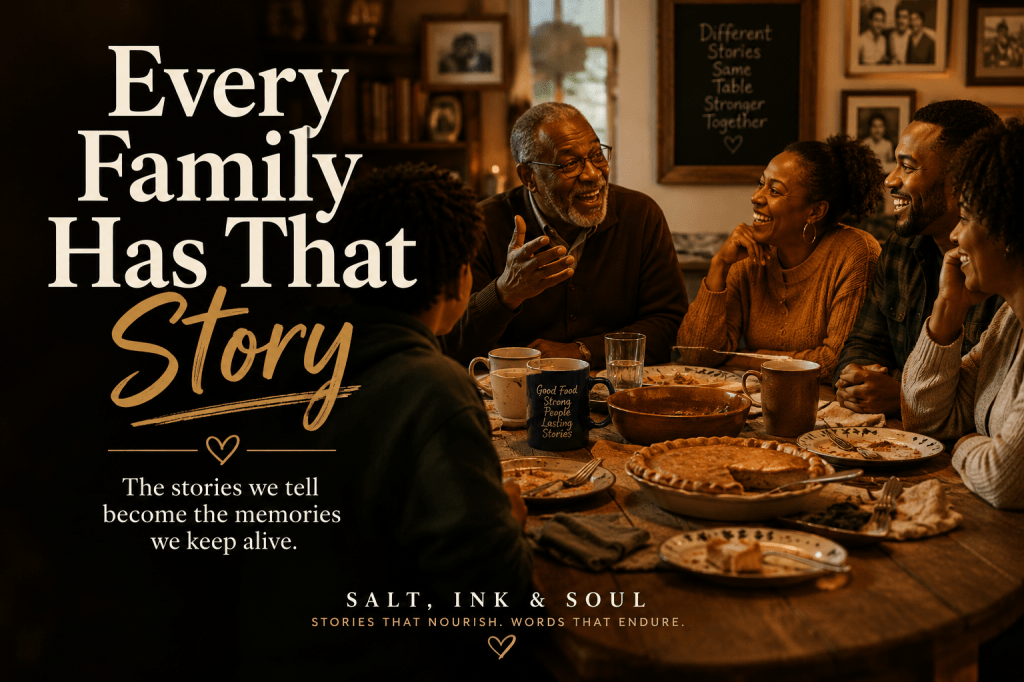
    When times get hard — when prices climb, when paychecks shrink, when systems fail — the table becomes a kind of refuge. It’s where someone decides to make a large pot of something that can be shared and enjoyed over time. Where cousins and neighbors and strays-who-became-family show up with whatever they have: a dish, a drink, a story, their tired selves. It’s where nobody asks for a résumé, just whether you’re hungry.

    I’ve written about food banks, church kitchens, and community centers — places where people line up for a hot meal and leave with more than calories. They leave with eye contact. With their name spoken kindly. With the knowledge that, at least for today, they were not invisible.

    Hunger isolates.

    But eating together does the opposite.

    Screens are always on, but doors often stay closed.

    We scroll through a thousand dinners while our own table stays dark.

    Meanwhile, someone in your neighborhood — maybe even someone you know — would show up if they knew you needed a place to sit.

    But somewhere along the way, we stopped knocking on doors.

    We stopped saying, “Come eat with us.”

    I wish I knew how to fix all of this — the homelessness, the hungry children, the broken families, the pride that keeps us apart. I don’t. I don’t have a blueprint for repairing what this culture has spent decades tearing down.

    What I do have is a small, stubborn belief in the power of the shared table.

    Maybe the first step isn’t policy or program — but an invitation.

    Maybe it’s offering help without attaching shame.

    Maybe it’s calling the kid you pushed out too soon and saying, “Do you want to come home for dinner?”

    Maybe it’s reaching out to the parent you’ve avoided and whispering, “Can we try again over a meal?”

    Maybe it’s rebuilding a bridge you thought was ash — not because you’re guaranteed a reunion, but because you believe someone might want to come back one day.

    One thing I do believe, deeply and without hesitation, is this:

    Families are better together.

    Whether they’re the ones we come from or the ones we gather along the way.

    The table won’t fix everything.

    It won’t erase history, won’t undo every mistake, won’t silence every hurt.

    But it is a place to start.

    A place where pride softens.

    Where hunger — for food, for belonging, for forgiveness — can finally speak.

    The table doesn’t have to be full to matter.

    It just has to be real.

    It just has to be offered.

    It just has to be shared.

    Kyle J. Hayes

    kylehayesblog.com

    Please like, comment, and share

    Related Reading:

    The Taste of Home,The taste of here

    Resources for Hard Times

    If you’re looking for practical help, food support, or community resources, you can visit the Salt, Ink & Soul Resources Page.
    👉 Resources for Hard Times

  • The Price of Hunger

    The Price of Hunger

      I’ve been thinking about what things cost—and not the kind you swipe a card for. I mean the deep arithmetic of living in a country where a cell phone plan can be unlimited, but food is not. Where the signal is strong, but the pantry is weak. Where the glow of a screen lights up a car window because that car has become a home.

    Almost everyone I know carries the world in their pocket. You can stream news of wars, scroll through lives curated to look full, and order meals you can’t afford to make. You can stay endlessly connected and still be utterly alone. The internet promised us closeness, but it delivered distraction. It can be a tool, yes—a way to organize, inform, share—but more often it steals the most human thing we have: presence.

    We’ve mistaken communication for connection. And in the process, we’ve forgotten what togetherness feels like.

    Yet hunger—real hunger—has a way of bringing humanity back into focus.

    When the cupboards empty and the paychecks stop, when storms tear down homes or fires erase entire neighborhoods, something ancient stirs in us. The same thing that once made neighbors knock on doors with covered dishes, or gather in church basements with ladles and folding chairs. In the worst times, people still find their way to one another. Hunger is cruel, but it’s also clarifying. It reminds us that survival was never meant to be a solo act.

    After disasters—after hurricanes, blackouts, floods—it’s always the same. People cook what’s left on their grills before the food spoils. They feed whoever shows up. They offer coffee, blankets, and soup. They don’t check a person’s party affiliation before pouring them a bowl. The same is true every day in quieter ways—at food banks, shelters, and community kitchens. The volunteers who show up to serve a hot meal aren’t there for headlines. They’re there because they remember what it’s like to need help.

    That’s the part we don’t talk about enough. The grace in hunger. The way it exposes the seams of a society, yes, but also the threads that still hold it together.

    We live in a nation where internet access is often cheaper than dinner. Where people can scroll for hours, but can’t afford eggs. Where the hunger of the people becomes another talking point, tossed around by politicians who will keep getting paid, even through shutdowns. They talk about “the economy” as if it were a creature separate from the hungry people. But I’ve never seen a spreadsheet feed a child.

    This isn’t the first time America has been hungry. We’ve seen breadlines stretch through city blocks and soup kitchens spring up in church basements. The difference now is distance. We’ve grown disconnected—not just from each other, but from the skills and spirit that carried those before us through hard times. They knew how to make a little stretch far. They understood that sharing wasn’t charity—it was a matter of survival.

    It may be time we remembered.

    When I write about food, I’m not writing about recipes; I’m writing about ritual. The act of caring. The alchemy of turning scarcity into sustenance. Bread from four ingredients. Beans with patience and salt. Casseroles that forgive substitutions. Meals that stretch and still have enough to share. These are more than thrift; they’re gestures of faith.

    But hunger asks something deeper than budgeting—it asks who we are when faced with someone else’s emptiness.

    Do we scroll past, or do we look up? Do we hoard, or do we serve? Do we build walls of data or bridges of care?

    The truth is, despite our wealth and connectivity, hunger remains what still binds us. It humbles us. It makes neighbors out of strangers. It reminds us that no matter how digital the world becomes, nothing replaces the sound of a shared meal—plates clinking, chairs scraping, laughter mixing with steam.

    That’s the humanity the internet can’t replicate. The kind that can’t be uploaded, only witnessed.

    So the answer to hunger begins not with politics or algorithms, but with presence. Remembering that someone, somewhere, is hungry tonight—and that we still have the power to feed them, even if only with our time, our attention, our company.

    The price of hunger isn’t just food insecurity; it’s the loss of empathy, the forgetting of our collective pulse. But it’s not too late to remember the rhythm.

    Because the thing about hunger—the painful, human truth—is that it teaches us what the internet can’t: that we were never meant to eat, to live, or to heal alone.

    Kyle J. Hayes

    kylehayesblog.com

    Please like, comment, and share

    If this reflection spoke to you, I invite you to explore the rest of the Humanity Through Food collection — stories of endurance, community, and the quiet grace of making “enough” in uncertain times.

    Each piece is a reminder that food is never just food — it’s a memory, a means of survival, and the most human act of all: sharing.

    Bread, Memory, and the Price of Enough

    How the simplest ingredients teach us what we’ve forgotten about patience and provision.

    The Weight of Enough – The Evolution of Survival Food

    A $10 casserole that became a symbol of family resilience and ingenuity.

    Nothing Wasted – The Grace of Leftovers

    A reflection on thrift, gratitude, and the sacred art of using what remains.

    Resources for Hard Times

    If you’re looking for practical help, food support, or community resources, you can visit the Salt, Ink & Soul Resources Page.
    👉 Resources for Hard Times

  • A Veterans Day Reflection

    A Veterans Day Reflection

    Lately, this space has been about doing what I can — small things, quiet things. Writing about food that costs less but still feeds fully. Reminding people that hard times have come before, and somehow, we made it. Trying to turn memory into a map, so maybe others can find their way through their own lean seasons.

    But today, I want to turn that attention outward — toward a different kind of endurance. Toward a group of people who also know what it means to do what they can — and often, far more. The ones who gave years, limbs, sanity, and sometimes everything, in the name of something larger than themselves.

    We set aside a day for them — Veterans Day — meant to honor those who served this country and, in too many cases, came home carrying its invisible weight. We say “thank you for your service,” and we mean it, most of us. But I keep wondering if that’s all we’ve learned to say.

    You don’t have to look far to see the contradiction: a country that never stops telling itself that it leaves no one behind, and yet, at almost every intersection, you can see someone it did. Veterans sleeping under bridges. Holding cardboard signs. Waiting at food pantries. People who once trained to survive in the most hostile places on earth are now fighting to survive at home.

    Yes, there are programs. Yes, there are benefits. But if you’ve ever stood in line at the VA or talked to someone navigating that system, you know the difference between what exists and what works.

    I’m not here to offer solutions. I don’t have them. I don’t know how to fix the machinery of a government that can spend billions on war but seems to run out of compassion on the return trip. What I know are smaller things — human things. I know how to say thank you. I know how to feed someone. I know how to remember.

    And maybe that’s something, even if it isn’t enough.

    When I write about food, I’m really writing about survival — about how we keep going when everything feels stripped bare. And in a way, that’s what veterans know better than anyone. They know how to keep moving through the noise. How to turn discipline into a ritual. How to make meaning in the middle of chaos. They’ve done it for us, even when we didn’t deserve it.

    The stories I tell, about stretching enough to feed a family — they’re small, domestic wars of endurance. Theirs were louder, bloodier, lonelier. But the lesson is the same: survival costs something, and someone always pays.

    I think about the phrase “thank you for your service.”

    How tidy it sounds. How quick. It fits easily into conversation, into tweets, into holiday speeches. But behind that politeness are pieces of people scattered across decades — the ones who never came back, and the ones who did, but not completely.

    I don’t have parades or medals to give.

    I have words — small, imperfect ones, but offered with weight.

    To every man and woman who served — thank you. For your strength, your sacrifice, your impossible patience. For doing what many couldn’t or wouldn’t.

    And to those still fighting their own wars at home — for housing, for healthcare, for peace of mind — I see you. I don’t have answers, but I have recognition. I have gratitude. And I have the conviction that we can do more, that we must do more, for a country that still calls itself free.

    So today, I’ll do what I can — remember, write, feed whoever I can reach.

    Because service shouldn’t end when the war does.

    Kyle J. Hayes

    kylehayesblog.com

    Please like, comment, and share

    Resources for Hard Times

    If you’re looking for practical help, food support, or community resources, you can visit the Salt, Ink & Soul Resources Page.

    👉 Resources for Hard Times

  • A Gentle Return

    A Gentle Return

    Salt, Ink & Soul — Field Journal Series, Part III

    It was as if I’d never started. All my momentum gone — vanished like breath on glass. The old voice returned, whispering reasons to stay still.

    Why go? It asked. You can see everything on a screen.

    Going outside is what made you sick.

    Your car is too big. The police will stop you.

    Each thought a stone in my gut, each hesitation dressed as reason.

    Still, I drove — slow, deliberate, a man testing the edge of his own promise. The sun climbed high over Albuquerque as if to dare me. I turned off Montaño and followed the signs toward Pueblo Montaño Picnic Area, a place recommended by a co-worker. At first, it seemed I was never meant to find it, but I did, somehow.

    At the entrance, the first thing I saw was the carvings — towering guardians hewn from fallen trees. Birds poised mid-flight, turtles climbing, coyotes howling into the stillness. Their faces caught the morning light, wood polished by wind and time.

    For a moment, I thought about turning around. The same quiet panic pressed behind my ribs: You’ve seen enough. You can take a photo from the car. No one will know the difference.

    But something in the carvings — maybe the permanence of their stillness — silenced the argument. I stepped out.

    The path curved through low brush and cottonwoods, beginning to yellow with the season. The air was sharp with the scent of sage and sun-warmed dust. My body, still cautious from its revolt, protested at first — a cough, an ache, a slow complaint in the knees. But the further I walked, the more those protests dissolved into breath.

    At a small bench near a patch of golden brush, I stopped. The wood was warm. The wind moved like a whisper that had nothing to prove. From where I sat, I could see the Rio Grande glinting between the trees — quiet, relentless, alive.

    And for the first time in days, I didn’t feel like a man recovering. I felt like one returning.

    Progress may not come in the form of long drives or grand destinations. Maybe it’s just the act of standing outside yourself long enough to see where you are.

    The world isn’t waiting to be conquered — it’s waiting to be witnessed.

    As I turned back toward the car, the carvings seemed different. The bird looked less like it was guarding the trail and more like it was blessing the departure. The coyotes, once frozen in howls, now looked like they were calling me forward.

    Maybe that’s what growth really looks like — not grand adventures, but small acts of motion.

    What do you think… should I keep going?

    Kyle J. Hayes

    kylehayesblog.com

    Please like, comment, and share

  • The Road Teaches Us to Listen

    The Road Teaches Us to Listen

    Salt, Ink & Soul — Field Journal Series, Part I

    The road begins long before you step onto it.

    For me, it starts with a small decision that never feels small: go. That’s the quiet contract I sign with myself in the dark—turn off the clock, get out of bed, make coffee even if the morning looks like a bad idea. Rain against the window, frost on the glass, wind leaning into the stucco—you go anyway. Jacket. Keys. A hand to the door, a muttered prayer that sounds like breath.

    Inside the car, I choose the season by touch. Heat in winter until my fingers thaw. Air in summer until the cabin stops tasting like sleep. The engine wakes with that low, devotional sound—humble, faithful, unglamorous. I sit with it a moment, letting my doubts burn off like fog on a warm hood. There’s always a reason to cancel. Fatigue. Weather. The long shadow of a mood I can’t name. The old lie that today isn’t the day.

    I have learned this much about myself: the early stops are the trap. You pause for a snack you don’t need, a second coffee you’re already holding, and suddenly the road becomes optional. Detours multiply. The invisible hand is never dramatic—it taps your shoulder with errands and returns you safely to the couch. So I pass the first exit. I don’t look right or left. I’ve stocked the snacks, filled the tank, and told no one where I’m headed. Commitment looks like a car at speed. The on-ramp curves up like a question, then drops you into a lane where the only language is forward.

    The interstate is my point of no return. The lines gather under the car like stitches sewing me to the day. I breathe out—a slight relief that feels larger than it should. I did the hard part. I left. I find the playlist that knows my miles: songs that ride low and steady, not too eager, not too clever. Something with space in it. Enough room for the land to speak.

    This is where the road begins to teach, if you let it.

    It teaches patience first. Mile markers count like beads through your fingers. Semis pass with the dignity of whales. The horizon doesn’t arrive; it reveals. You become a witness to your own habits—how your chest loosens after the second exit, how your jaw unclenches when the first long stretch unfolds, how your shoulders drop when the radio fades to static. The world steals the choreography you keep trying to impose on it. You start to hear the hum—tires negotiating asphalt, crosswinds tuning the cabin to a note you can almost name, the slight rattle of a life you’ve packed in a hurry.

    It teaches with small mercies. A gas station clerk who calls you “love” without making it a performance. A church sign that gets the parable right by accident. A plastic bag snared on a fence, stubborn against the wind. The familiar ache of a diner mug against your palms. Eggs that taste better for the road it took to get there. The cook who doesn’t look up but understands precisely who you are: someone who left a house this morning to go looking for something they can’t carry back in both hands.

    It teaches with the kind of quiet that isn’t empty. Out here, silence has texture. It lives in the low whine of steel guardrails, in the dry grass that whispers even when there’s no breeze, in the pale blue that the sky saves for days like this. You roll the window down and the air meets you, honest—dust, oil, a memory of rain. Somewhere just beyond the shoulder, a hawk draws solemn circles in a column of heat and refuses to explain itself.

    The road talks in fragments and expects you to assemble meaning. A boarded-up motel where someone once honeymooned in good faith. A burial of sun-bleached crosses huddled on a ridge. A billboard sermon that works only because the sky won’t stop listening. Nothing arrives tidy. The point isn’t clarity. The point is attention.

    I used to believe you traveled to escape your life for a while. Now I think you travel to stop lying to it. Movement scrapes the varnish off your days. It replaces routine with exposure: the vulnerability of a stalled engine, the humility of a wrong turn, the grace of a stranger who points you toward a road you didn’t know you needed. Each mile asks a better question than the one before it. Who are you when nobody is asking for your performance? Who are you when the only thing to do is keep going?

    The farther I get from my usual noise, the more I understand the discipline of listening. I turn the music down until the speakers barely breathe. I count cattle guards without trying. I let the wind dictate when the window goes up or down. The road becomes a metronome for the part of me that won’t learn patience any other way. My foot steadies. My mind does not empty; it organizes. Old griefs get filed under new light. The never-ending list shortens, not because the tasks vanish, but because the road insists on proportion: you are small, and still held.

    By midday, the light changes its mind. Shadows shorten, and the heat decides what kind of day it wants to be. 

    I pull off onto a frontage road that minors in regret and majors in perspective. The surface is rough enough to earn respect. A low ridge rises, and I climb it on foot because the day asks and because sometimes the answer is yes, even when you don’t know the question. Up top, the wind has a cathedral voice. The land arranges itself into a map you can read with your tongue—dust, sun, iron, a little mercy. I don’t take a picture. I don’t say a word. I let the horizon do what it does best: decide nothing for me and change everything anyway.

    Back in the car, I don’t check the time. Time is a city tool. Out here, we measure by light—how it sharpens, how it softens, how it lifts off the hood like a thin leafing. I aim the nose toward home, not because I’m finished, but because finishing is not the point. The road has said what it needed to say: that listening is work, that attention is a sacrament, that the world is not waiting to be narrated so much as witnessed with a bit of respect.

    Near the interstate, the old instincts return. The exits appear like promises or temptations. The hand that tried to steer me back this morning is quieter now. It didn’t vanish; it lost its authority. I put the playlist away and let the tires do the singing. The lines pull me forward, not faster, just truer.

    I don’t come back with revelations big enough for billboards. I come back with small instructions written in dust: drink water; call your people; cook something simple; write a sentence that owes nothing to applause. The engine cools. The day lowers its shoulders. I sit a moment before going in, the car clicking as it forgets its heat.

    Maybe the road isn’t a way out so much as a way through. Maybe its gift is not destination but calibration—the chance to tune your own noise until you can hear the hum beneath everything, the one that was there before playlists and plans, the one that sounds like wind across open ground.

    Maybe the point was never to arrive.

    Maybe it was to finally listen.

    Kyle J. Hayes

    kylehayesblog.com

    Please like, comment, and share