Tag: SaltInkAndSoul

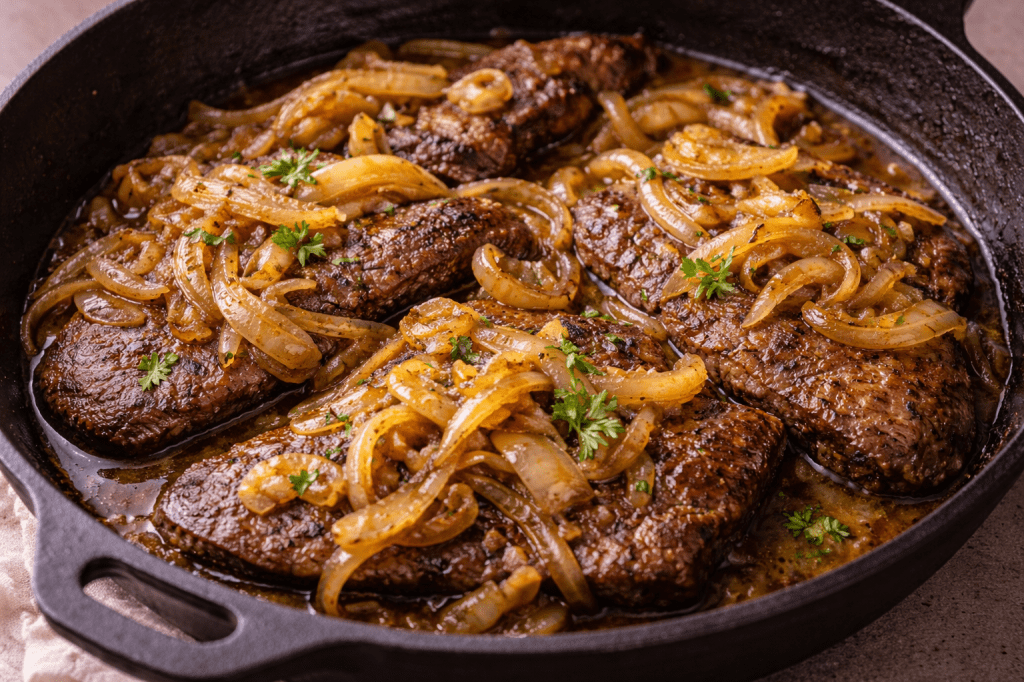
  • Liver and Onions 

    Liver and Onions 

    Like most children, I hated liver.

    Everything about it — the look, the smell, the taste. You were always told it was good for you, the way adults say things when they know you won’t enjoy them. My mother made liver and onions every now and then, and like most people we knew, she cooked it well done, like every other meat. By the time it hit the plate, it resembled shoe leather. You ate it fast so you wouldn’t taste it, swallowing memory along with obligation.

    That stayed with me.

    So when people later talked about how good liver could be, I assumed they were either lying or nostalgic. Then someone whose opinion I respected told me something simple: your taste buds change. So I tried it again. I don’t know if it was age or skill, but what I tasted wasn’t what I remembered. This recipe is for anyone still traumatized by that first version. Try it. You might like it.

    Why This Version Works for me 

    • Liver cooked tender, not punished
    • Onions are slow and sweet, not rushed
    • Respect for the ingredient — and the eater

    Recipe Details

    Serves: 2–3

    Prep Time: 15 minutes

    Cook Time: 20 minutes

    Total Time: About 35 minutes

    Ingredients

    Liver

    • 1 lb beef liver, sliced
    • 1 cup milk (for soaking)
    • Salt and black pepper, to taste
    • ½ tsp garlic powder
    • ½ tsp onion powder
    • ½ tsp smoked paprika
    • ¼ tsp cayenne pepper (optional)
    • ½ cup all-purpose flour (for dredging)

    Onions

    • 2 large yellow onions, thinly sliced
    • 2 tbsp butter
    • 1 tbsp oil
    • Pinch of salt

    For Cooking

    • 2 tbsp oil
    • 1 tbsp butter

    Instructions

    1. Soak the liver

    Place liver slices in a bowl and cover with milk.

    Soak for 20–30 minutes, then drain and pat dry.

    This softens the flavor and changes everything.

    2. Season and dredge

    Season the liver lightly with:

    • salt
    • black pepper
    • garlic powder
    • onion powder
    • smoked paprika
    • cayenne (if using)

    Dredge lightly in flour. Shake off excess.

    3. Cook the onions

    Heat butter and oil in a skillet over medium heat.

    Add onions with a pinch of salt.

    Cook slowly, stirring occasionally, until soft, golden, and lightly sweet — about 10–12 minutes.

    Remove and set aside.

    4. Cook the liver

    In the same skillet, add oil and butter if needed.

    Cook liver slices over medium-high heat, about 2–3 minutes per side.

    You want a good sear and a tender center — not overcooked.

    5. Bring it together

    Return onions to the skillet.

    Gently toss with the liver and let everything warm together for 1–2 minutes.

    Taste and adjust seasoning.

    Serve

    Serve hot with:

    • mashed potatoes
    • rice
    • or a piece of cornbread to catch what’s left in the pan. (see recipe)

    This is food that asks you to slow down — just a little.

    Notes

    • Overcooking is what ruins liver. Stop before you think you should.
    • Milk soak matters. Don’t skip it.
    • This dish is about restraint, not force.

    Kyle J. Hayes

    kylehayesblog.com

    Please like, comment, and share

    Resources for Hard Times

    If you’re looking for practical help, food support, or community resources, you can visit the Salt, Ink & Soul Resources Page.
    👉 Resources for Hard Times

  • What We Mean When We Say “Our Culture”

    What We Mean When We Say “Our Culture”

    The word culture gets used carelessly now.

    It gets flattened into playlists and palettes. Into slang that travels faster than its meaning. Into food that’s photographed better than it’s remembered. People say culture when they mean style. Or vibe. Or whatever is popular long enough to be profitable.

    But that’s not what we mean.

    When we say “our culture,” we’re not talking about trends.

    We’re talking about what stayed.

    Our culture is not defined by how visible it is, but by how much pressure it survived. It is the set of practices that held when everything else was designed to break. The habits that outlived laws. The knowledge that didn’t need permission to be passed down.

    I learned that before I could explain it.

    I learned it in kitchens where nobody measured anything, but nothing was wasted. In the way elders cooked like they were remembering something with their hands, in the discipline of knowing when enough was enough—when to add heat, when to lower it, when to let something rest.

    That restraint is culture.

    It’s the same restraint you hear in certain sentences. The kind that don’t rush to impress. That leaves space on purpose. You hear it in Baldwin’s insistence that language must tell the truth even when it makes people uncomfortable.

    Before history was written, it traveled by sound.

    It moved through voices that carried grief without explanation and joy without apology. Through spirituals that mapped escape. Through blues that name loss, without begging for sympathy. Through singers like Billie Holiday, who could hold an entire history in a pause.

    Nina Simone understood this: that art wasn’t decoration.

    It was testimony.

    That wasn’t entertainment.

    That was record-keeping.

    And the cooks were doing it too.

    Our food was never just about flavor. It was about continuity. About making sure people ate, yes—but also about making sure they remembered who they were while doing it. Recipes weren’t written down because they didn’t need to be. They lived in repetition. In watching. In correction offered gently. In knowing when something tasted right without explaining why.

    That’s why recipes function as records.

    A dish tells you where a people were. What they had access to. What they were denied. What they salvaged anyway. It tells you how they thought about care—who was fed first, how far food was expected to stretch, how sweetness showed up even when conditions said it shouldn’t.

    Bread pudding exists because waste was not an option.

    Lemon sauce exists because joy was still necessary.

    Neither of those things happened by accident.

    This is what makes our culture specific.

    Not borrowed.

    Not interchangeable.

    Not a costume someone can put on without carrying the weight.

    Our culture was shaped by constraint and refined by care. It learned to be precise because excess wasn’t available. It learned to be expressive because silence was dangerous. It learned to be communal because survival required it.

    That’s why defining it matters.

    Not to build gates.

    But to keep the record straight.

    Because erasure rarely announces itself. It arrives as minimization. As everybody struggled. As to why keep bringing it up? As we’re all the same now. It arrives by disconnecting culture from origin and selling the leftovers as novelty.

    But culture isn’t a vibe.

    It’s a system.

    A system of survival practices passed hand to hand. Voice to ear. Pan to plate. Sentence to sentence.

    And when we say our culture, what we mean is this:

    We kept something alive when it wasn’t supposed to survive.

    We carried memory without archives.

    We built beauty without resources.

    We made care look ordinary so it wouldn’t be taken from us.

    Writers did it with language.

    Musicians did it with sound.

    Artists did it with vision.

    Cooks did it with repetition.

    All of them answered the same question:

    How do you tell the truth without disappearing?

    So when I write about food, I’m not being nostalgic. I’m being precise. I’m pointing to one of the most reliable records we have. An archive you can eat. A history that still feeds people.

    That’s our culture.

    Not because it’s popular.

    But because it held.

    Kyle J. Hayes

    kylehayesblog.com

    Please like, comment, and share

    Resources for Hard Times

    If you’re looking for practical help, food support, or community resources, you can visit the Salt, Ink & Soul Resources Page.

    👉 Resources for Hard Times

  • The First Time

    The First Time

    The first time I had bread pudding, my mother made it.

    I don’t remember the occasion. I don’t remember the day. I only remember the way it landed—soft, warm, familiar in a way that felt older than me. Like something meant to comfort without asking questions.

    I don’t remember her making it again.

    But that first bite stayed. Long enough that, years later, I found myself trying to chase it. First, with store-bought sliced bread. Then with better bread. Then, eventually, with bread I made myself—flour, water, yeast, salt. Learning how texture changes. How time matters. How restraint matters.

    The sauces came next. Heavy ones. Sweet ones. The kind that covers mistakes. Then the lighter ones. Sharper ones. Sauces that don’t hide the pudding, just walk beside it.

    I’m still working on it. On all of it.

    But for now, this is the version I make.

    The one that feels closest to memory without trying to recreate it.

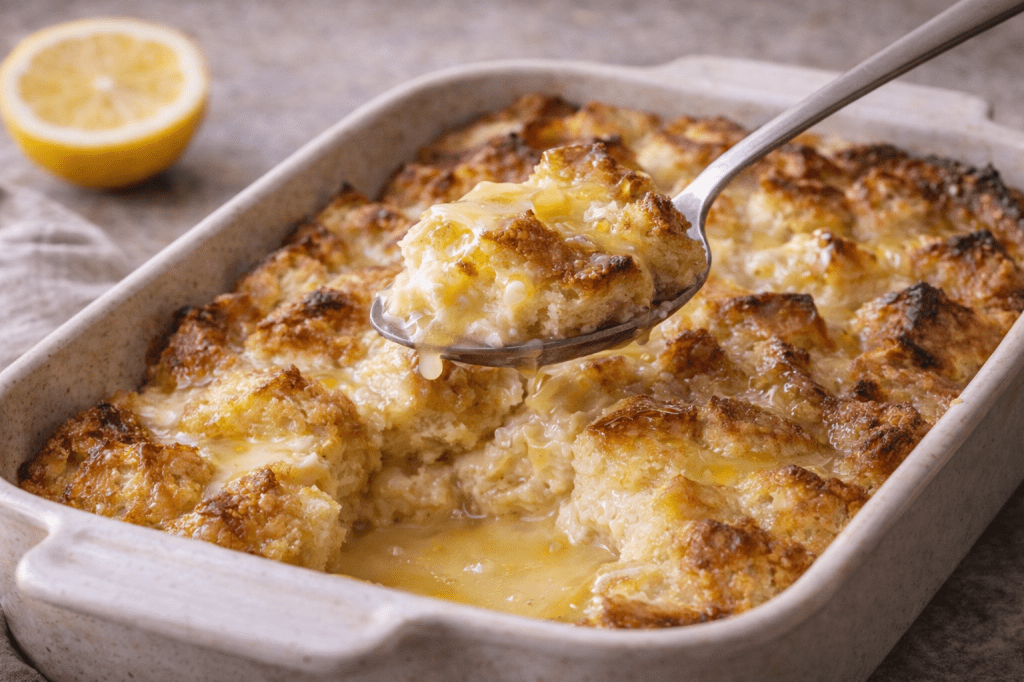
    Bread Pudding with Lemon Sauce

    Warm, custardy, and gently sweet, this bread pudding leans into comfort while the lemon sauce keeps it awake. It’s not loud. It doesn’t perform. It just sits there, waiting for you to notice.

    Recipe Details

    Serves: 6–8

    Prep Time: 20 minutes

    Bake Time: 45–50 minutes

    Total Time: About 1 hour 15 minutes

    Ingredients

    Bread Pudding

    • 4 cups cubed stale bread
    • (My personal bread recipe works well)
    • 2 cups whole milk
    • 1 cup heavy cream
    • 4 large eggs
    • 1 cup granulated sugar
    • 1 tsp vanilla extract
    • ½ tsp ground cinnamon
    • ¼ tsp ground nutmeg
    • ½ cup raisins or chopped pecans (optional)
    • Butter, for greasing the baking dish

    Lemon Sauce

    • ½ cup unsalted butter
    • ¾ cup granulated sugar
    • ½ cup heavy cream
    • Zest of 1 lemon
    • 2–3 tbsp fresh lemon juice (to taste)
    • Pinch of salt

    Instructions

    1. Prepare the pudding

    Preheat oven to 350°F (175°C).

    Butter a 9×13-inch baking dish.

    Place the cubed bread evenly in the dish. Sprinkle with raisins or pecans if using.

    2. Make the custard

    In a large bowl, whisk together:

    • milk
    • heavy cream
    • eggs
    • sugar
    • vanilla
    • cinnamon
    • nutmeg

    Pour the custard over the bread, pressing gently so everything gets soaked.

    Let sit for 20–30 minutes. This matters.

    3. Bake

    Bake uncovered for 45–50 minutes, until the center is set and the top is golden.

    Remove from the oven and let rest for a few minutes before serving.

    4. Make the lemon sauce

    While the pudding bakes, melt butter in a saucepan over medium heat.

    Add sugar and cream, stirring until the sugar dissolves.

    Bring to a gentle simmer and cook 4–5 minutes, stirring occasionally.

    Remove from heat. Stir in:

    • lemon zest
    • lemon juice
    • pinch of salt

    Taste and adjust—this sauce should be bright, not sharp.

    To Serve

    Serve the bread pudding warm.

    Spoon the lemon sauce slowly over the top.

    This isn’t a dessert that rushes you.

    It asks you to sit.

    Kyle J. Hayes

    kylehayesblog.com

    Please like, comment, and share

    Resources for Hard Times

    If you’re looking for practical help, food support, or community resources, you can visit the Salt, Ink & Soul Resources Page.
    👉 Resources for Hard Times

  • The Weight of What You Carry

    The Weight of What You Carry

    In the American South, where heat teaches patience whether you want the lesson or not, there lived a small boy named Amari.

    Adults called him full of energy. What they meant was that his body often moved faster than his judgment. His feet were quick. His mouth was quicker. He laughed before asking and burned hot when he felt small.

    He lived near a road that once mattered more than it did now. Trucks still passed. Church folk still waved. Old men still sat in folding chairs like they were guarding something no one had named aloud. His mother worked long days. His Uncle Michael cooked.

    Not fancy food.

    Not restaurant food.

    The kind that fed tired hands. The kind that smelled like onions in cast iron and meant you’re safe here. Salt mattered in that kitchen—not just for taste, but for balance. For knowing when something was right.

    One morning, his Uncle Michael handed Him a small paper sack.

    “Take this next door,” he said. “And don’t spill it.”

    Amari nodded. Serious. Focused. For a moment.

    Outside, the block was alive—boys throwing rocks at a rusted can, a radio too loud, laughter ricocheting between houses. Amari wanted to be seen.

    So he set the sack down for just a second.

    The wind came without asking. It tipped the bag. Salt scattered across the concrete, bright and unforgiving.

    Amari froze.

    Salt doesn’t come back once it’s rushed. It only tells the truth about what happened.

    Someone laughed. Not cruel. Just careless.

    That’s when Mr. Lewis, who sat on his porch every morning like time had placed him there on purpose, spoke up.

    “You know what that is?” he asked, nodding at the ground.

    “Just salt,” Amari said.

    Mr. Lewis shook his head. “Salt is what’s left after everything else burns away. You don’t rush it.”

    Then he asked, gently, “What were you really trying to do, son?”

    Amari swallowed. “I wanted to look strong.”

    Mr. Lewis nodded. “Strength ain’t speed. It’s control.”

    Amari carried the empty bag back and told his Uncle the truth before fear could dress it up. He didn’t yell.

    “Today,” he said, “you cook with me.”

    All day, Amari learned to wait. To stir without splashing. To listen to the heat, to the timing, to himself. By evening, his Uncle Michael handed him another sack.

    “This time,” he said, “carry it slow.”

    And Amari did.

    Not out of fear.

    Out of understanding.

    That night, with cicadas humming and the wind still moving through the trees, Amari learned what no one had rushed to teach him:

    Resilience isn’t never spilling.

    Self-discipline isn’t punishment.

    Self-awareness is knowing when you’re rushing—

    and choosing to hold what matters steady.

    The wind kept blowing.

    But Amari knew how to carry now.

    Kyle J. Hayes

    kylehayesblog.com

    Please like, comment, and share

    Resources for Hard Times

    If you’re looking for practical help, food support, or community resources, you can visit the Salt, Ink & Soul Resources Page.

    👉 Resources for Hard Times

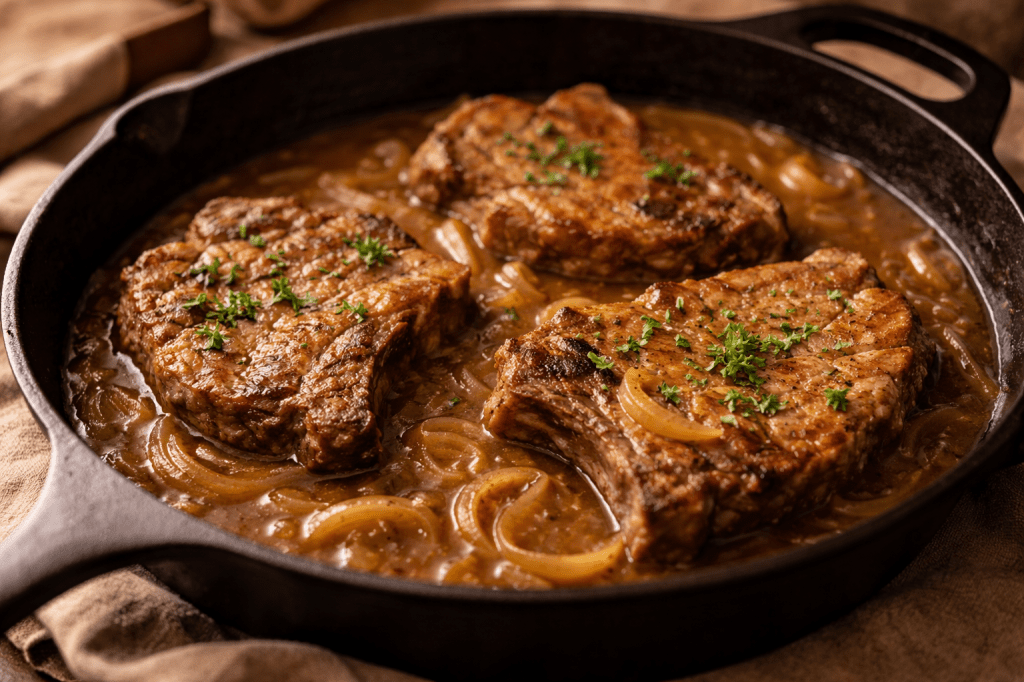
  • Smothered Pork Chops

    Smothered Pork Chops

    Some meals announce themselves.

    And some meals wait.

    Smothered pork chops belong to the second kind. They don’t arrive crispy or loud. They don’t crackle for attention. They lower the heat and take their time. They understand that tenderness isn’t something you rush—it’s something you protect.

    This is the kind of food you make when you’re tired but still want to eat well. When the day took more than it gave back. When you need something steady. Something that doesn’t argue with you.

    Smothering is an act of care.

    You cover the meat to keep it from drying out. You keep it close to the gravy so it can soften without falling apart. You let it go slow enough to become what it’s supposed to be.

    That’s the point.

    This isn’t restaurant food. It isn’t meant to impress. It doesn’t photograph clean. It shows up in a pan and asks you to sit down.

    Smothered Pork Chops

    Serves 2–3. Scales easily.

    Ingredients

    • 4 pork chops
    • (bone-in if you can—flavor and patience live there)
    • Salt and black pepper
    • Garlic powder (optional, but familiar)
    • Onion powder (same)
    • ½ cup all-purpose flour
    • 2–3 tbsp neutral oil or bacon fat
    • 1 large onion, sliced
    • 2 cups chicken broth (or water, if that’s what you have)
    • Optional additions:
      • a splash of milk or cream
      • a pinch of cayenne
      • a little butter at the end

    How to Make Them

    Pat the pork chops dry. Season both sides generously with salt, pepper, and whatever else you think is right. Not measured. Just enough that you’d miss it if it wasn’t there.

    Dredge lightly in flour. Shake off the excess. You’re not breading. You’re giving the gravy something to hold onto later.

    Heat the oil in a wide skillet over medium heat. Brown the chops on both sides until they pick up color. Not cooked through. Just enough to look like they’ve lived a little.

    Remove the chops and set them aside.

    Lower the heat. Add the onions to the same pan. Stir them through the leftover flour and oil. Let them soften. Let them take their time. Scrape up the brown bits. Those matters.

    Slowly pour in the broth, stirring as you go. The gravy will thicken on its own if you let it. If it gets too thick, add a little more liquid. If it’s thin, give it time. Gravy knows what it’s doing.

    Taste. Adjust. This is where you decide what kind of night it’s been.

    Nestle the pork chops back into the gravy. Spoon some over the top. Cover the pan. Lower the heat.

    Let them simmer gently for 30–45 minutes, until tender. Not falling apart. Just easy.

    Finish with a little butter or milk for softness. Or don’t.

    How to Eat Them

    With rice.

    With mashed potatoes.

    With whatever helps you get the gravy where it needs to go.

    Eat them while they’re hot. Save what’s left.

    They’ll be better tomorrow.

    Some meals don’t need applause.

    They just need a fork, a chair, and a little quiet.

    Kyle J. Hayes

    kylehayesblog.com

    Please like, comment, and share

    Resources for Hard Times

    If you’re looking for practical help, food support, or community resources, you can visit the Salt, Ink & Soul Resources Page.
    👉 Resources for Hard Times

  • For Now, February

    For Now, February

    A Salt, Ink & Soul opening to a month of food, memory, and refusal

    For now, the calendar still gives us February.

    For now, it still calls it Black History Month—like history is something you can contain inside thirty-one little squares. Like the story fits neatly between a Valentine’s aisle and a President’s Day sale. Like you can honor a people with a banner and then go right back to pretending you don’t owe them anything.

    But I keep saying for now because I can feel the drag of erasure in the air.

    Not the dramatic kind.

    Not the kind that arrives with sirens.

    The quiet kind.

    The administrative kind.

    The kind that wears a clean shirt and says, We’re just updating the curriculum.

    The kind that edits a paragraph, removes a name, deletes a program, and calls it “neutral.”

    The kind that pretends it isn’t doing violence because it isn’t shouting while it does it.

    It is a strange thing to watch a country try to forget the very hands that helped hold it together.

    Stranger still to watch it happen while the evidence is everywhere—under glass in museums, in the bones of cities, in the laws written to contain us, and in the culture that gets celebrated only after it’s been drained of its origin.

    Because that’s the trick, isn’t it?

    America loves Blackness the way it loves seasoning.

    It wants the flavor without the farm.

    The rhythm without the bruises.

    The sweetness without the sweat.

    So yes—for now.

    And since forgetting seems to be trending, I’m going to do what Black folks have always done in the face of people trying to erase us.

    I’m going to make something undeniable.

    I’m going to cook.

    Not the kind of cooking meant to impress strangers.

    Not the kind that performs.

    Not the kind that comes with tweezers and a lecture.

    I mean the real kind.

    The kind that stains the wooden spoon.

    The kind that fogs the windows.

    The kind you smell in your clothes the next morning and don’t even mind—because it reminds you that you fed somebody. That you survived another week. That you made a house feel like a home.

    This month, I’m focusing on one part of our contribution that no one can remove from me because it’s been in me since birth:

    Food.

    Not as a trend.

    Not as content.

    As inheritance.

    Because even if they remove our names from the walls, they can’t remove the way we seasoned what we were given. They can’t remove the improvisation—how we learned to make a feast out of “not much.” They can’t remove the genius of turning what was dismissed into something worth gathering around.

    They can’t remove the way our people built entire philosophies of care from pots and pans and whatever showed up in the week’s hands.

    Food is history you can taste.

    And the beautiful, complicated truth is this: our food is not one thing.

    It is regional the way our lives have always been regional—shaped by migration, soil, water, weather, what was available, what was stolen, what was traded, what was shared, what was guarded.

    A dish can have the same name and still be a different story depending on where you’re standing when you make it.

    Someone in Louisiana will tell you the right way and mean it.

    Someone in Georgia will tell you the right way and mean it, too.

    Someone in Mississippi will roll their eyes at both of them and start cooking anyway.

    All three are telling the truth.

    Because food isn’t just ingredients. It’s teaching. It’s what your auntie did when you were sick. It’s how your granddad ate when money was tight. It’s the way your family made the ordinary feel sacred without ever using the word sacred.

    So what I’m offering this month won’t claim to be universal. It won’t pretend to be the official version of anything.

    These dishes will be mine—shaped by what I was taught, what I learned the hard way, and what I had to make work when there wasn’t time, money, or energy for anything fancy.

    That’s what makes them honest.

    And if you come from your own line of recipes, your own set of we don’t do it like that, understand this:

    You belong here, too.

    This isn’t about declaring a winner.

    It’s about keeping the record alive.

    It’s about refusing the lie that our culture is just a vibe anyone can borrow without context.

    It’s about saying:

    We were here.

    We are here.

    And we fed this country in more ways than it can admit.

    Because food is one of the most intimate ways people leave fingerprints on the world.

    Laws can be rewritten.

    Statues can be removed.

    Books can be banned.

    But try taking a taste memory from somebody.

    Try telling someone to forget greens cooked right.

    Try telling them to forget cornbread that actually means something.

    Try telling them to forget a kitchen that felt like safety.

    You can’t. Not fully.

    That’s why they try to package it.

    Rebrand it.

    Sell it back.

    Make it “comfort food” without ever naming the discomfort it came from.

    But we know.

    And this month, I want to honor what we know—not with speeches, but with a plate.

    So yes, please enjoy.

    And yes, you will probably have to walk a few extra steps.

    Not because this is indulgence for indulgence’s sake, but because our food was never meant to be eaten with shame. It was meant to be eaten with gratitude. In the community. Without apology.

    Walk your steps.

    Drink your water.

    Take your time.

    Then come back to the table.

    Because this month—for now—I’m choosing to tell Black history the way I learned it first:

    Not from a textbook.

    From a kitchen.

    From a hand that loved me enough to season what little we had.

    From a people who refused to disappear.

    Welcome to February.

    Kyle J. Hayes

    kylehayesblog.com

    Please like, comment, and share

    Resources for Hard Times

    If you’re looking for practical help, food support, or community resources, you can visit the Salt, Ink & Soul Resources Page.

    👉 Resources for Hard Times

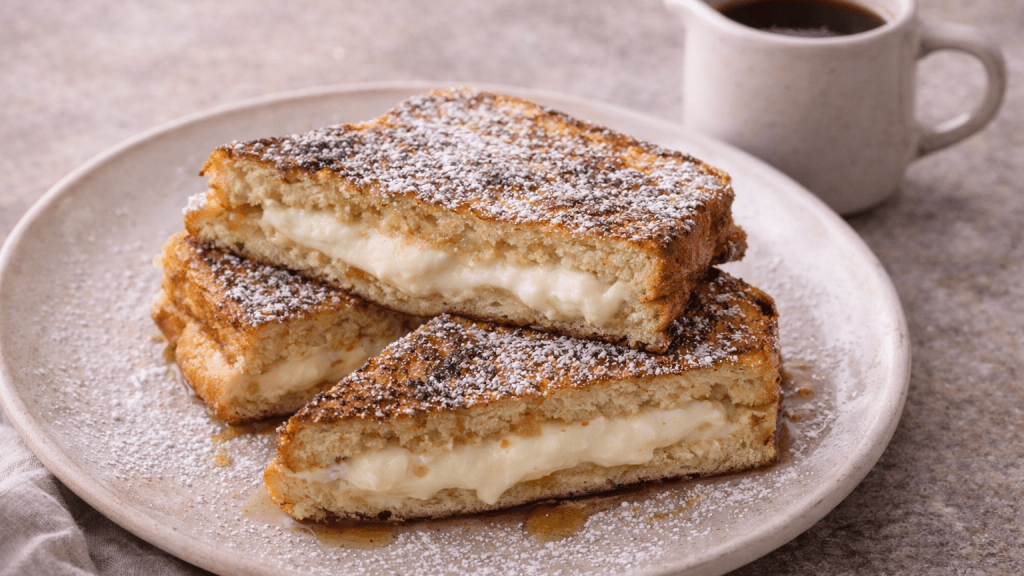
  • Soul-Food Cream Cheese–Stuffed French Toast

    Soul-Food Cream Cheese–Stuffed French Toast

    A Salt, Ink & Soul Sunday Brunch

    Some dishes live between hunger and remembrance.

    Not flashy. Not rushed.

    Just warm enough to ask you to sit down.

    This French toast belongs to Sunday mornings that don’t demand productivity. The kind that carries quiet, coffee steam, and the understanding that sweetness doesn’t need to shout to be felt.

    Recipe Details

    Serves: 2–3

    Prep Time: 15 minutes

    Cook Time: 15 minutes

    Total Time: About 30 minutes

    Ingredients

    Cream Cheese Filling

    • 4 oz cream cheese, softened
    • 1½ tbsp brown sugar
    • (white works, but brown hums deeper)
    • ½ tsp vanilla extract
    • Pinch cinnamon

    Optional, but right:

    • 1 tsp sweet potato purée or
    • 1 tbsp mashed ripe banana

    French Toast Base

    • 6 thick slices of bread
    • Sandwich Bread or Use the recipe for “The Most Basic Bread.”
    • 2 large eggs
    • ½ cup milk or evaporated milk
    • ½ tsp cinnamon
    • ¼ tsp nutmeg
    • Pinch salt

    For Cooking

    • Butter
    • Neutral oil (canola or vegetable)

    To Finish (Choose What Fits the Morning)

    • Warm cane syrup or maple syrup
    • Powdered sugar
    • Butter-pecan drizzle (optional, but devastating)
    • Fried apples or peaches
    • Crispy bacon or sausage on the side

    Instructions

    1. Make the filling

    In a small bowl, mix together:

    • cream cheese
    • brown sugar
    • vanilla
    • cinnamon
    • sweet potato or banana (if using)

    The texture should feel spreadable and slow — something meant to be handled gently.

    2. Assemble the sandwiches

    Spread the filling evenly over 3 slices of bread.

    Top with the remaining slices.

    Press gently.

    This is care, not force.

    3. Make the custard

    In a shallow bowl, whisk together:

    • eggs
    • milk
    • cinnamon
    • nutmeg
    • salt

    Dip each sandwich briefly, turning once.

    No drowning. Just enough.

    4. Cook slowly

    Heat a skillet over medium-low heat.

    Add butter with a small splash of oil.

    Cook the sandwiches 3–4 minutes per side, slow and steady, until deeply golden and warmed through.

    If the outside speaks before the inside is ready, lower the heat.

    Always.

    Optional: Skillet Fruit

    In a small pan, add:

    • 1 apple or peach, sliced
    • 1 tbsp butter
    • 1 tsp brown sugar
    • Pinch cinnamon

    Cook until soft and glossy.

    Not jam.

    Just a memory waking up.

    To Serve

    Slice diagonally.

    Dust lightly with powdered sugar.

    Drizzle syrup after plating.

    Serve breakfast meat on the side — not on top.

    Coffee poured slowly.

    This isn’t a brunch that performs.

    It sits with you.

    A Quiet Note

    This French toast isn’t about indulgence.

    It’s about enough.

    Enough sweetness to feel cared for.

    Enough restraint to leave room for thought.

    Enough history in the spices to remind you where you’ve been.

    It’s the kind of dish that understands silence at the table.

    The kind that doesn’t need praise.

    Just presence.

    Other Recommendations:

  • Felix the Fox and the Garden That Reflected You

    Felix the Fox and the Garden That Reflected You

    There was a garden tucked deep inside the Whispering Woods that most creatures walked past without noticing.

    Not because it was hidden—but because it waited to be found.

    Felix the Fox noticed it one morning when the light fell differently between the trees. The air felt softer there, as if the forest itself had taken a breath and decided to hold it.

    “This place feels like it’s listening,” Felix said.

    The garden did not answer.

    It didn’t need to.

    Felix wasn’t alone. Maple the Rabbit hopped beside him, curious and open, while nearby, Bristle the Magpie watched carefully, wings tucked tight against her sides. Bristle liked shiny things. She liked keeping them close. It made her feel safe.

    The garden seemed to notice that, too.

    A gentle path appeared beneath Felix’s paws—wide enough for more than one, marked by flowers that leaned outward, as if inviting company.

    Maple followed easily.

    Bristle hesitated.

    Her path was different. It shimmered faintly, scattered with small, glinting objects half-buried in the soil. Each one caught the light just right.

    Bristle gathered them quickly.

    The more she collected, the quieter the garden became.

    Felix’s path felt heavier at first. He found fallen branches blocking the way, thorny vines tangled where others might stumble. But each time he paused, Maple or another forest friend appeared—not summoned, just arriving.

    Together, the work became lighter.

    The flowers along Felix’s path grew brighter, not because he cleared it alone, but because he never did.

    Bristle reached a clearing first.

    In the center stood a smooth pool of water, still as glass. She leaned over it, expecting to see something shining back at her.

    Instead, she saw herself alone—wings full, paws empty.

    The garden did not scold.

    It simply waited.

    Farther along, Felix reached his own clearing. When he looked into the pool, he didn’t see just himself. He saw Maple laughing. Bramble helping. Piper perched nearby, humming softly.

    The water seemed to whisper:

    What you share stays with you.

    Bristle listened from the edge of the trees.

    Her wings felt heavy now—not with treasure, but with something lonelier.

    She looked back at the path she’d taken. The flowers there had dulled, not angry, just tired.

    Bristle made a choice.

    She returned the shiny things to the soil. Slowly. One by one. Then she followed the sound of voices rather than the sparkle.

    When she reached the others, Felix didn’t say anything.

    He just made room.

    As Bristle helped lift a branch and shared a found trinket instead of keeping it, the garden changed again. Color returned. The air warmed. The path widened.

    The Whispering Woods had noticed.

    By the time they left, the garden looked no different than before—quiet, unassuming, easy to miss.

    But Felix knew better.

    “Some places don’t show you who they are,” he said softly.

    “They show you who you are.”

    The forest seemed pleased with that.

    And long after the garden disappeared behind them, its lesson stayed—growing quietly wherever kindness was chosen over keeping.

    Some gardens don’t grow flowers.

    They grow understanding.

    Kyle J. Hayes

    kylehayesblog.com

    Please like, comment, and share

    Read More Felix Stories.

    👉 Felix Collections

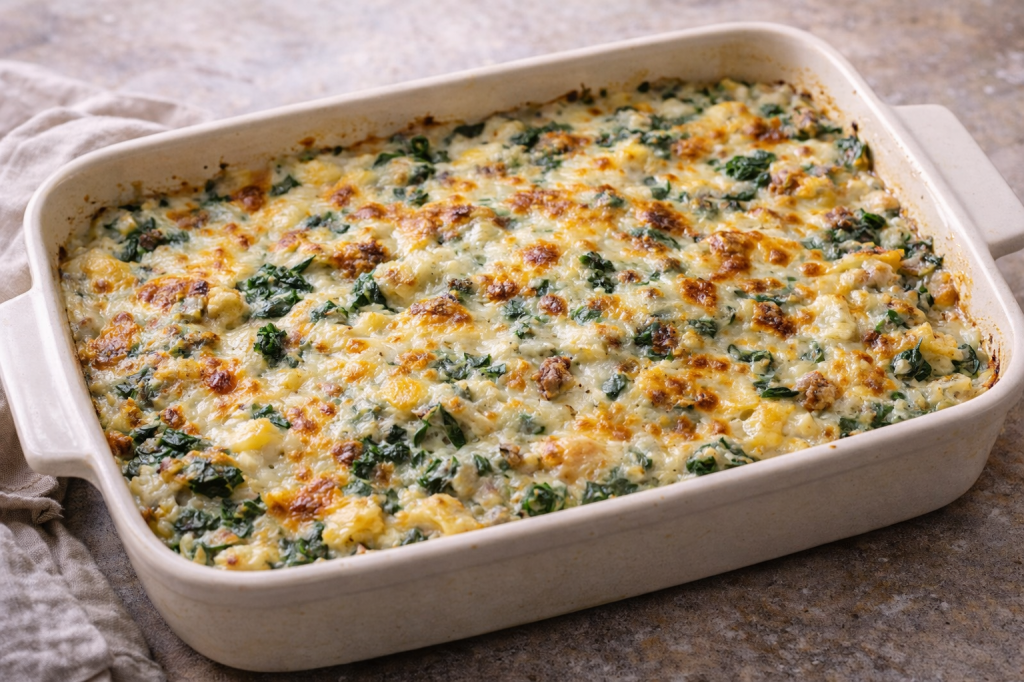
  • Spinach & Artichoke Chicken Casserole (Keto)

    Spinach & Artichoke Chicken Casserole (Keto)

    By the end of January, most of us aren’t looking for novelty.

    We’re looking for something that holds.

    This casserole does that. It borrows the familiar comfort of spinach-artichoke dip and turns it into a meal that feeds more than one night. Creamy without excess. Rich without heaviness. The kind of dish that lets the oven do the work while you step away for a moment.

    This is reset cooking without the language of correction — just something warm and dependable when the month asks a little more of you.

    Why This Works for Keto

    • Low-carb, high-fat
    • No flour, no starch
    • Familiar flavors that don’t feel restrictive

    Comfort without compromise.

    Recipe Details

    Servings: 6

    Prep Time: 15 minutes

    Cook Time: 30 minutes

    Total Time: About 45 minutes

    Net Carbs: ~4g per serving

    Ingredients

    For the Base

    • 2 lbs boneless, skinless chicken breasts, cooked and shredded
    • (rotisserie works well — remove skin)
    • 1 can (14 oz) quartered artichoke hearts, drained and chopped
    • 3 cups fresh spinach, chopped
    • (or 1½ cups frozen spinach, thawed and well-drained)

    For the Creamy Sauce

    • 8 oz cream cheese, softened
    • ½ cup mayonnaise
    • ½ cup sour cream
    • ¾ cup grated Parmesan cheese
    • 1 cup shredded mozzarella (reserve ½ cup for topping)
    • 2 cloves garlic, minced
    • ½ tsp onion powder
    • ½ tsp salt
    • ¼ tsp black pepper
    • Optional: pinch of red pepper flakes

    Optional Topping (Highly Recommended)

    • ½ cup shredded mozzarella
    • 2 tbsp grated Parmesan
    • ¼ cup crushed pork rinds or almond flour

    Instructions

    1. Preheat the oven

    Preheat oven to 375°F (190°C).

    Lightly grease a 9×13-inch baking dish.

    2. Prepare the chicken

    If using raw chicken, cook until fully done and shred.

    If using rotisserie chicken, remove the skin and shred the meat.

    Set aside.

    3. Make the sauce

    In a large bowl, combine:

    • cream cheese
    • mayonnaise
    • sour cream
    • Parmesan
    • ½ cup mozzarella
    • garlic
    • onion powder
    • salt
    • black pepper
    • red pepper flakes (if using)

    Stir until smooth and thoroughly combined.

    4. Add the vegetables

    Fold the spinach and chopped artichokes into the sauce, mixing until evenly coated.

    5. Combine everything

    Add the shredded chicken to the bowl and stir until everything is well distributed.

    6. Assemble the casserole

    Spread the mixture evenly into the prepared baking dish.

    Top with:

    • remaining mozzarella
    • extra Parmesan
    • crushed pork rinds or almond flour (if using)

    7. Bake

    Bake uncovered for 25–30 minutes, until bubbly and lightly golden on top.

    8. Rest and serve

    Let the casserole rest for 5–10 minutes before serving.

    This allows the sauce to settle and thicken slightly.

    Serving Suggestions

    Serve with:

    • roasted zucchini
    • cauliflower rice
    • a simple green salad

    Finish with a drizzle of olive oil or a sprinkle of fresh basil for brightness.

    Notes

    • For extra creaminess, add ¼ cup heavy cream to the sauce
    • Kale or mushrooms work well in place of spinach
    • Keeps well refrigerated up to 4 days
    • Freezes well for up to 2 months
  • What Stayed With Me This Month

    What Stayed With Me This Month

    January didn’t arrive with fireworks for me.

    It didn’t kick open the door and demand a reinvention.

    It sat down quietly and waited to see what I would do.

    Every year, January carries a certain pressure—the sense that you’re supposed to emerge from the holidays renewed, corrected, aimed in a better direction. As if surviving December isn’t an accomplishment in itself. As if rest only counts if it’s followed immediately by improvement.

    But this month didn’t ask that of me.

    And because it didn’t ask, I noticed more.

    What stayed with me wasn’t a resolution.

    It wasn’t a plan.

    It wasn’t the sudden clarity people like to perform this time of year.

    What stayed with me were smaller things.

    A kind of tired that didn’t feel like failure.

    The difference between being exhausted and being empty.

    The relief of realizing that not every ache is a problem to solve—some are just signals asking for care.

    What stayed with me was food that did its job without announcing itself.

    Meals that didn’t impress anyone but left me steady.

    Soup that didn’t look fancy.

    Chicken and cabbage in a single pan.

    Breakfast made from what was already there.

    There’s a particular kind of trust that builds when you stop chasing novelty and start paying attention to what actually holds you together. January reminded me that nourishment doesn’t need a spotlight. It needs consistency.

    What stayed with me were the stories meant for children that told the truth anyway.

    Felix learning that rest comes before effort.

    That nourishment matters more than appearance.

    That hard work has meaning when it serves something larger than ego.

    That staying—being present—is sometimes the bravest choice.

    Writing those stories reminded me that lessons don’t stop being true just because we age out of picture books. We just pretend we don’t need them anymore.

    What stayed with me was the question of work—the kind that doesn’t announce itself.

    The work of restraint.

    The work of not becoming what you oppose.

    The work of continuing without applause.

    Honoring Dr. King’s birthday this month brought that into sharper focus. Not the polished version of his legacy, but the disciplined one. The version that understood anger but refused to let it drive. The version that knew the dream was unfinished and chose responsibility anyway.

    That stayed with me.

    And maybe most of all, what stayed with me was permission.

    Permission to arrive slowly.

    Permission to trust what feeds me.

    Permission to stop fixing things that aren’t broken just because the calendar flipped.

    January didn’t make me new.

    It reminded me of what’s already working.

    As the month closes, I’m not carrying forward any goals. I’m carrying forward awareness. Attention. A quieter sense of direction.

    Not everything needs to be upgraded.

    Not everything needs to be optimized.

    Some things just need to be noticed—and kept.

    Kyle J. Hayes

    kylehayesblog.com

    Please like, comment, and share

    Resources for Hard Times

    If you’re looking for practical help, food support, or community resources, you can visit the Salt, Ink & Soul Resources Page.
    👉 Resources for Hard Times