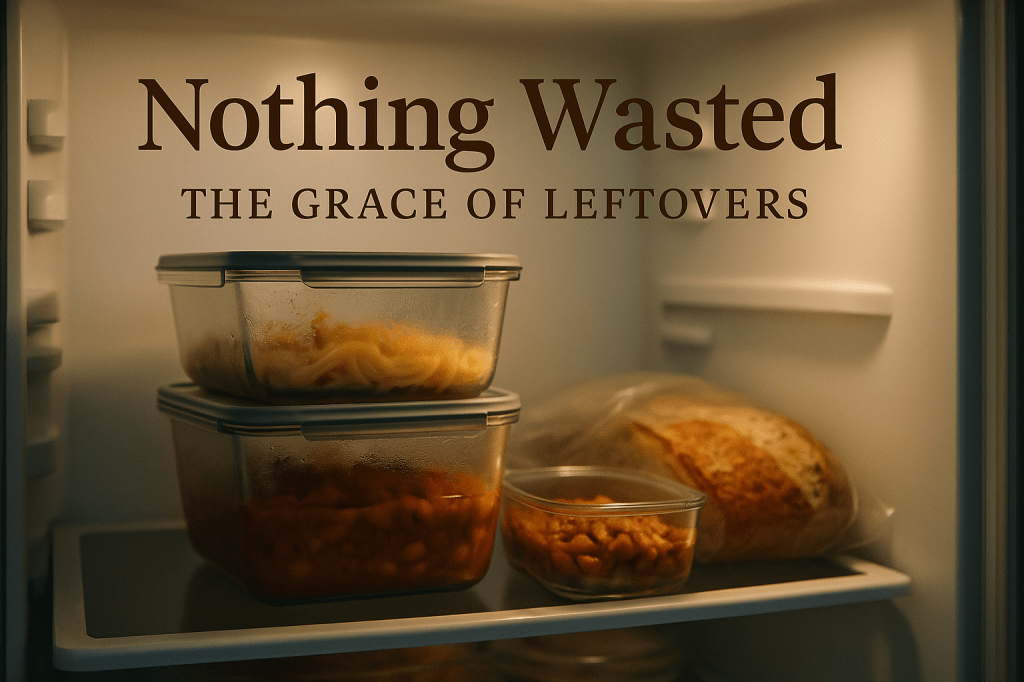
I grew up in a house where tomorrow lived in the refrigerator—stacked in mismatched containers, labeled only by memory and love. We didn’t have much, so we learned to keep what we had. A pot cooled on the stove like a promise. A slice of bread wrapped in a paper towel felt like insurance against whatever the next day might bring.
So when I hear people say they don’t eat leftovers—say it like a flex, like the world owes them a fresh performance every night—I don’t understand. Why throw away another lunch, another midnight snack, another chance to make something out of almost nothing? Where I’m from, waste isn’t just waste. It’s disrespect—to the hands that cooked, to the hours that earned the money, to the hunger we remember even when our plates are full.
Leftovers carry a particular kind of grace. They’re proof that somebody planned ahead, that care was stretched across time. They’re the echo of yesterday’s effort, still singing. And yes—I still cook too much on purpose. Because there’s a relief in opening the door after a heavy day and finding your own kindness waiting for you in a glass dish.
The world will tell you that food is a spectacle, a one-night show with a Michelin curtain call. But in the kitchens where I learned, food was a continuum. It traveled: pot to plate to container to skillet to lunchbox to after-school bowl. It got better with time, the way beans deepen and soups settle into themselves. The trick wasn’t reinvention for the sake of reinvention. It was respect.
Here’s what I’ve learned about the second life of supper—the way a meal can keep feeding us if we let it.
Second Lives (How I use Leftovers)
Bread
- Day 2: Toast with a swipe of butter and a little salt.
- Day 3: Croutons (cube, oil, bake) or breadcrumbs (dry, blitz, jar).
- Day 4: Bread pudding—milk, eggs, a handful of raisins; Sunday morning becomes gentler.
Roast Chicken or Baked Thighs
- Night after: Shred into tacos or quesadillas with onions and a squeeze of lime.
- Lunch: Chicken salad with whatever’s around—celery, apple, a spoon of yogurt or mayo.
- Final act: Simmer bones with onion ends and carrot stubs to create a stock that tastes like patience.
Rice
- Day after: Fried rice—egg, scallions, soy, any lonely vegetables.
- Or fold into soup to make it stick to your ribs.
- Or press into a pan with oil for a crispy rice cake topped with a soft egg.
Beans
- Next day: Blend half for a quick refried spread; reserve the other half whole.
- Stretch: Chili with whatever ground meat (or none), or spoon over toast with hot sauce.
- Last stop: Bean soup—stock, garlic, a heel of Parmesan if you’ve got it.
Roasted Vegetables
- Breakfast: Hash in a skillet with an egg on top.
- Bowl life: Toss with greens and grains; finish with vinaigrette.
- Soup move: Blitz with warm stock, then drizzle with olive oil and a sprinkle of pepper.
Pasta & Sauce
- Baked life: Mix with a spoon of ricotta or cottage cheese, top with breadcrumbs, and bake.
- Pan-fry in a little olive oil until the edges crackle; suddenly, the old becomes new.
Casseroles
- Next day slice: Reheat in a skillet with a little butter for crisp corners and a better story.
- Croquettes: Mash, bread, pan-fry—humble gold.
Steak, Pork Chops, or Sausage (leftover bits)
- Fried rice, breakfast hash, or quick tacos with pickled onions.
- Tiny pieces become flavor—sprinkled into greens or beans like punctuation.
The Scraps
- Herb stems → chimichurri or stock.
- Parmesan rinds → soup.
- The last spoon of jam → vinaigrette with vinegar and oil.
- Pickle brine → marinade for chicken, or a bracing splash in potato salad.
The Quiet Rules (Because Respect Is Also Safety)
Cool food within two hours. Store in shallow containers.
Most cooked dishes: 3–4 days in the fridge; many soups and casseroles freeze up to 2 months.
Reheat until steaming—not just warm, but honest. Label and date so that in the future you don’t have to guess.
The Weeklong Buffet We Call Thanksgiving
Thanksgiving is the high holy day of leftovers—the only time Americans brag about cold turkey like it’s a love language. The fridge becomes a geography: stuffed with hills, cranberry lakes, and green-bean valleys. We start with the classic sandwich—turkey, dressing, gravy, maybe that scandalous swipe of cranberry—and then we get clever:
- Turkey pot pie with leftover vegetables and gravy, topped with a quick crust.
- Stuffing waffles pressed in the iron, crowned with a runny egg.
- Mashed potato pancakes—crisp outside, forgiving inside.
- Bone broth that warms the house for days.
Thanksgiving teaches what the year forgets: abundance is not a single meal but a stretch of days made tender by forethought.
When people say they won’t eat leftovers, I hear a kind of amnesia. I hear a forgetting of the hands that peeled, stirred, salted, tasted. I hear a forgetting of the mile between hunger and relief. In my kitchen, we don’t forget. We reheat. We revive. We say thank you twice.
Because leftovers aren’t the past. They’re the persistence of care.
They are proof that enough can last, if we let it.
And in a life that asks so much of us, there’s no virtue more radical than refusing to throw away what still has love to give.
Kyle J. Hayes
kylehayesblog.com
Please like, comment, and share
Resources for Hard Times
If you’re looking for practical help, food support, or community resources, you can visit the Salt, Ink & Soul Resources Page.
 Salt,Ink, & Soul
Leave a reply to Budget Thanksgiving — Making Enough – Salt,Ink, & Soul Cancel reply